
How to Preserve Canadian Root Vegetables for Months in Winter
Before refrigeration, Canadian farm families ate from the root cellar straight through to spring — carrots pulled sweet from cold storage in February, potatoes that lasted until the new planting. That knowledge still works, and it still saves serious money. Proper storing of root vegetables in winter in Canada turns a cheap autumn haul from a farmers’ market or discount grocer into months of produce at harvest-season prices.
This guide covers the vegetables that store well (carrots, potatoes, beets, turnips, parsnips, onions, and winter squash), the conditions each one needs, and how to rig up effective storage whether you have a cold room, an unheated garage, or just a cool closet.
Key Takeaways
- Most root vegetables want cold (0–4°C), dark, and humid conditions — a cold room, unheated garage corner, or cool basement does the job.
- Onions and winter squash are the exceptions: they prefer cool, dry, and ventilated storage.
- Never wash storage vegetables before storing; brush off loose soil and cure where needed.
- Check stored produce every two to three weeks and remove anything softening — one bad specimen spoils the neighbours.
- Well-stored carrots, beets, and parsnips keep 4–6 months; potatoes 3–5 months; squash 2–4 months.
The Three Enemies: Warmth, Light, and Dry Air
Stored vegetables are alive — they respire, lose moisture, and eventually sprout or rot. Your job is to slow all three processes. Cold (just above freezing) slows respiration dramatically. Darkness prevents potatoes from greening and sprouting. Humidity prevents carrots and parsnips from going limp and rubbery.
The classic Canadian solution is the cold room: an unheated, insulated corner of the basement, often under the front steps, that holds near 0–4°C through winter. If you have one, you are set. If not, the strategies below approximate those conditions with ordinary household spaces.
Storage Setups for Real Houses (No Root Cellar Required)
The cool closet or unheated entryway
A closet against an exterior wall, an unheated mudroom, or a corner of an attached garage that stays above freezing works for most roots. Place a simple thermometer (a $10 min-max thermometer is ideal) and check it during the first cold snap — you want 0–4°C for carrots, beets, turnips, and parsnips, and 4–7°C for potatoes.
The box-and-sand method for carrots and parsnips
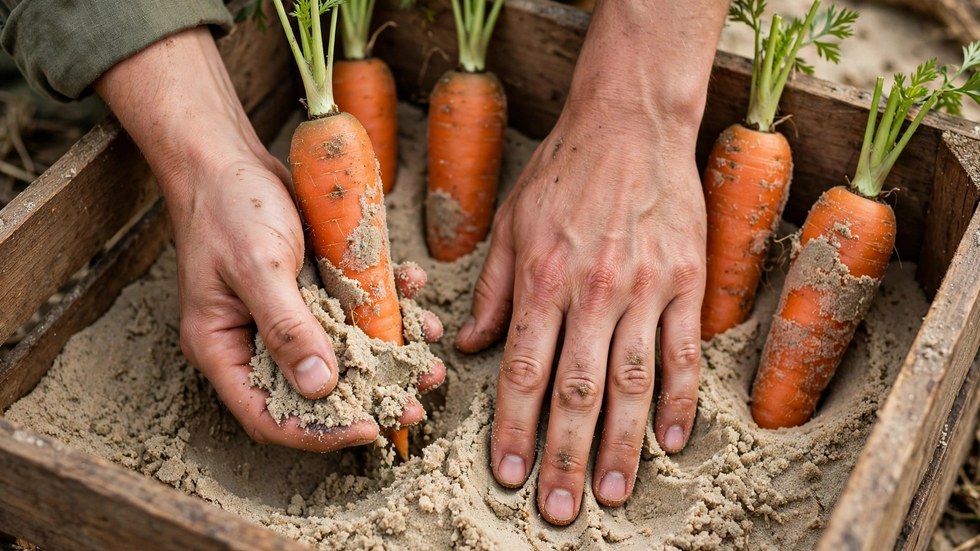
Layer unwashed carrots in a sturdy box or bin with damp (not wet) sand, sawdust, or peat moss, making sure roots do not touch each other. The packing medium holds humidity around each root and insulates against temperature swings. Stored this way at near 0°C, carrots stay crisp for 4–6 months. Check monthly and pull any that soften.
Perforated bags for beets and turnips
Beets and turnips store well in perforated plastic bags in the crisper drawer of a spare fridge — or a cool room — at 0–2°C with high humidity. Trim the tops to about 2 cm (cutting too close causes bleeding and invites rot) but leave the thin tail root intact.
Onions and squash: dry and ventilated
Onions need the opposite treatment: cool (0–4°C is fine, but up to 10°C works), dry, dark, and ventilated. Braid them, hang them in mesh bags, or spread them in a single layer in a ventilated box. Never store onions in plastic bags — trapped moisture rots them. Winter squash wants 10–15°C with good air circulation; a cool pantry shelf or basement shelf away from the furnace is ideal. Cure squash for a week or two at room temperature after harvest or purchase to harden the skin first.
Vegetable-by-Vegetable Guide
Carrots
The star of winter storage. Choose firm, unblemished roots; twist off tops immediately (tops draw moisture from the root). Store in damp sand or sawdust at 0–1°C. Expect 4–6 months. Carrots actually sweeten in cold storage as starches convert to sugars — February carrots often taste better than October ones.
Potatoes
Store at 4–7°C in complete darkness — light triggers solanine, the bitter green compound. Burlap sacks, paper bags, or ventilated boxes all work. Do not refrigerate below 4°C for long periods if you can avoid it; cold converts starches to sugars, which darkens fries and crisps. Keep potatoes away from onions: onions release moisture and gases that make potatoes sprout faster. Expect 3–5 months from good storage varieties like Russet or Yukon Gold.
Beets
Nearly as durable as carrots. Trim tops to 2 cm, keep the tail root, and store at 0–2°C in perforated bags or damp sand. They keep 4–5 months and are among the most nutritious storage vegetables — roast them, grate them raw into salads, or pickle a batch in autumn for variety.
Turnips and parsnips
Both want the carrot treatment: 0–2°C, humid, dark. Parsnips are biennial and particularly sweeten after frost exposure. They keep 3–5 months. Turnips are slightly less durable at 3–4 months but earn their place as a cheap, versatile mash and stew vegetable.
Onions
Cure for two to three weeks in a dry, ventilated spot until the necks are tight and papery. Then store cool, dry, and dark — 0–4°C ideal. Good storage onions (yellow cooking onions) keep 5–6 months. Check for soft necks monthly; use those first.
Winter squash
Butternut, acorn, hubbard, and spaghetti squash store 2–4 months at 10–15°C with air circulation — do not stack them tightly. A squash with an intact stem and unblemished skin is a squash that keeps. Once cut, refrigerate and use within a week.
Storage-Duration Reference Table
| Vegetable | Ideal temp | Humidity | Light | Expected storage life | Key tip |
|---|---|---|---|---|---|
| Carrots | 0–1°C | High (damp sand) | Dark | 4–6 months | Do not let roots touch |
| Potatoes | 4–7°C | Moderate | Complete dark | 3–5 months | Keep away from onions |
| Beets | 0–2°C | High | Dark | 4–5 months | Trim tops to 2 cm |
| Turnips | 0–2°C | High | Dark | 3–4 months | Use before they soften |
| Parsnips | 0–2°C | High | Dark | 3–5 months | Sweeten after frost |
| Onions | 0–4°C | Low, ventilated | Dark | 5–6 months | Cure until necks are papery |
| Winter squash | 10–15°C | Moderate, air flow | Dim OK | 2–4 months | Cure skin 1–2 weeks first |
Spoilage Checks: The Two-Minute Fortnightly Routine
Every two to three weeks, run through your stored vegetables and remove anything compromised. For carrots, beets, turnips, and parsnips, squeeze gently — anything soft, slimy, or mouldy comes out immediately, because rot spreads through contact and through the packing medium. For potatoes, pull any that are sprouting heavily, soft, or green; small sprouts on an otherwise firm potato can simply be snapped off and the potato used promptly.
For onions, feel the necks — soft necks mean use-now. For squash, press the skin and check the stem end; any soft spots or weeping means cook it this week. This routine takes minutes and is the difference between losing a box and losing a single vegetable.
Canadian Meal Prep & Macro Estimator
Enter your costs in $ CAD and get per-portion cost, macros and freezer guidance.
Storing Root Vegetables for Winter in Canada: What to Buy in Autumn
You do not need to grow anything — late farmers’ markets, farm stands, and discount grocers all sell storage-grade vegetables in October and November, often in bulk bags at the year’s lowest prices. Choose specimens with intact skins, no cuts or bruises, and firm flesh. “Seconds” sold cheaply for immediate cooking are a false economy for storage; damage is where rot starts.
Buy in quantities you will actually eat. A 20 kg bag of potatoes is a bargain only if your household eats potatoes steadily through winter. For most families, 10 kg of potatoes, 5 kg of carrots, a few kilos each of beets and onions, and half a dozen squash cover the season beautifully — and cost a fraction of buying the same vegetables week by week at winter prices.
Reviving Tired Vegetables Instead of Tossing Them
Not every limp carrot is a lost carrot. Vegetables that have gone slightly soft from moisture loss — bendy carrots, wrinkled beets, floppy celery-adjacent roots — can often be revived with an ice-water bath. Trim the ends, submerge them in very cold water for an hour or two, and many will crisp back up enough for cooking. This works because the cells rehydrate; it does not work on anything slimy, mouldy, or foul-smelling, which should be composted without debate.
Sprouted potatoes deserve a nuanced call. Small sprouts on a firm potato are harmless — snap them off and cook the potato promptly, since sprouting accelerates softening. But potatoes that are green under the skin, heavily sprouted, or bitter-tasting should be discarded; the green indicates solanine, which cooking does not destroy. When in doubt, throw it out — a $2 bag of potatoes is never worth a stomach ache.
Wrinkled squash and soft-necked onions move to the front of the cooking queue rather than the compost. Roast soft squash immediately into soup, and dice soft-necked onions for the freezer, where chopped onion keeps for months. The goal of winter storage was never perfection — it was having good food in February without paying February prices. A little triage is part of the system.


You May Also Like
Real Canadian Superstore Meal Prep Hacks: PC Blue Menu Bargains

Buying Frozen vs Fresh Produce in Canadian Winters: Nutrition & Cost
