
Buying Frozen vs Fresh Produce in Canadian Winters: Nutrition & Cost
Every January, Canadian grocery stores tell the same story: fresh berries at $6 a punnet, limp lettuce shipped from thousands of kilometres away, and peppers priced like a luxury good. The frozen vs fresh produce Canada winter question isn’t really a debate at all — it’s a strategy question. Knowing when frozen wins, when fresh is still worth it, and which items to buy in each form can cut your winter produce bill dramatically without sacrificing nutrition.
This guide sticks to widely accepted nutrition guidance — no miracle claims, no cherry-picked studies. Just practical cost comparisons, honest nutritional context, and a clear buy list for the cold months.
- Frozen produce is typically picked ripe and frozen quickly, retaining much of its nutritional value — a practical, widely recommended winter option in Canada.
- In winter, frozen berries, peas, corn, and spinach often cost one-third to one-half the price of fresh equivalents.
- Fresh still wins for hardy storage vegetables (potatoes, carrots, cabbage, onions, apples) that store well and stay cheap all winter.
- Buy frozen for cooking (soups, stir-fries, smoothies, sauces) and fresh for raw eating (salads, snacking) — match the form to the use.
The Nutrition Question, Honestly Answered
The most common worry about frozen produce is that it’s nutritionally inferior. The general guidance from dietitians and public health sources is reassuring: frozen fruits and vegetables are typically harvested at peak ripeness and frozen quickly, which preserves much of their vitamin and mineral content. Fresh produce, by contrast, can spend days or weeks in transport and storage before reaching a Canadian shelf in February — time during which some nutrient content naturally declines.
A few honest caveats, because nuance matters:
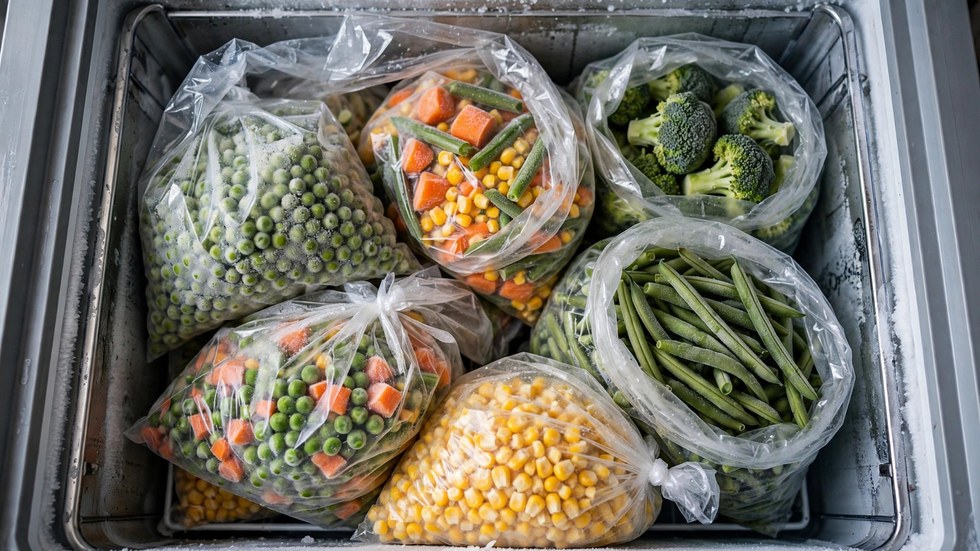
- Blanching before freezing (standard for most frozen vegetables) causes small losses of water-soluble vitamins like vitamin C and B vitamins. The losses are modest, and the vegetables remain nutritious.
- Frozen produce with added sauces or syrups is a different product — check ingredient lists. Plain frozen vegetables and fruit (ingredients: the vegetable, nothing else) are the meal-prep choice.
- Variety still matters most. The nutritional “winner” between frozen and fresh is far less important than eating a variety of vegetables consistently. A diet with frozen veg every day beats a diet with occasional expensive fresh veg.
- Sodium in some frozen vegetable blends with seasoning packets can be high — buy plain bags and season yourself.
Bottom line: for a winter meal prepper, frozen produce is nutritionally sound. The decision should be driven by cost, taste preference, and how you’ll cook it.
Winter Cost Comparison: Frozen vs Fresh
Typical mid-winter price ranges at major Canadian grocery chains. Fresh prices spike hardest in January–March; frozen prices barely move all year — that’s the core of the strategy.
| Produce Item | Frozen (Est. CAD) | Fresh in Winter (Est. CAD) | Winter Winner |
|---|---|---|---|
| Blueberries (500g / ~1 lb) | ~$4.50 (1 kg bag) | ~$5.99 (340g punnet) | Frozen — dramatically cheaper per gram |
| Strawberries (500g) | ~$4.00 (1 kg bag) | ~$4.99 (454g pack) | Frozen |
| Mixed vegetables (1 kg) | ~$3.50–$5.50 (2 kg bag) | N/A (no direct fresh equivalent) | Frozen — unbeatable convenience value |
| Peas (750g) | ~$2.50 | ~$4.99 (fresh, when available) | Frozen |
| Corn (750g) | ~$2.50 | ~$1.00/ear (often starchy in winter) | Frozen — better texture in winter |
| Spinach (300g) | ~$1.99 (box) | ~$4.99 (fresh 284g tub) | Frozen for cooking; fresh for salads |
| Broccoli (500g) | ~$3.00 (1 kg bag) | ~$3.49/head (~500g) | Close — frozen slightly cheaper, zero waste |
| Bell peppers | ~$3.50 (750g strips) | ~$5.99 (3-pack) | Frozen for cooking; fresh for raw |
| Mango (500g) | ~$4.00 (1 kg bag) | ~$2.50 each (variable quality) | Frozen — consistent ripeness |
…and where fresh still wins in winter
| Produce Item | Typical Winter Price (CAD) | Why Fresh Wins |
|---|---|---|
| Potatoes (10 lb bag) | ~$2.97–$3.97 | Canadian-grown, stores for months, cheapest calorie in the store |
| Carrots (2 lb bag) | ~$1.79–$1.99 | Hardy, sweet, versatile raw or cooked |
| Cabbage (per head) | ~$1.99 | Keeps 2–3 weeks refrigerated; huge volume per dollar |
| Onions (3 lb bag) | ~$2.49–$2.97 | Foundation of all savoury cooking; stores for weeks |
| Apples (3 lb bag) | ~$3.97–$4.97 | Canadian storage apples eat well all winter |
| Bananas | ~$0.69/lb | Price barely moves year-round; perfect prep fruit |
| Beets, turnips, parsnips | ~$1.99–$2.99/bag | Root vegetables built for Canadian winters |
Canadian Meal Prep & Macro Estimator
Enter your costs in $ CAD and get per-portion cost, macros and freezer guidance.
Frozen vs Fresh Produce Canada Winter: The Smart Strategy
Combine the two tables and a clear system emerges — match the form to the use:
Buy frozen
- Berries — for smoothies, oatmeal, yogurt bowls, and baking. Winter fresh berries are a budget-killer with inconsistent quality.
- Peas and corn — for fried rice, soups, shepherd’s pie, and pasta. Frozen texture beats tired winter fresh.
- Spinach and kale — for anything cooked: curries, pasta sauces, egg scrambles, soups. A box of frozen spinach replaces a $5 tub of fresh at less than half the price.
- Mango and pineapple chunks — for smoothies and salsas. Consistent ripeness, no guessing.
- Pepper strips and stir-fry blends — for fajitas, stir-fries, and sheet-pan meals where they’ll be cooked anyway.
- Broccoli and cauliflower florets — for roasting and steaming. Zero trim waste versus fresh heads.
Buy fresh
- Root vegetables and cabbage family — potatoes, carrots, cabbage, beets, onions. These are winter’s natural produce; they’re cheap because they’re in season for storage.
- Apples and bananas — your raw-eating fruit all winter. Reliable, affordable, no freezer needed.
- Salad greens in small quantities — if you eat salads, buy only what you’ll use in 3–4 days. Or pivot to cabbage-based slaws, which keep far longer and cost far less.
- Fresh herbs (selectively) — a $3 pack of fresh cilantro or parsley transforms a week of frozen-veg cooking. Use it as a garnish strategy, not a volume strategy.
Cooking With Frozen Produce: Technique Notes
Frozen produce fails only when treated like fresh. A few adjustments:
- Don’t thaw before roasting or stir-frying. Cook from frozen over high heat — thawing first releases water and steams instead of sears. Spread in a single layer and give it space.
- Add frozen spinach directly to hot dishes. It melts into curries, soups, and pasta sauces in minutes. Squeeze out excess water first if the dish is already saucy enough.
- Frozen berries go straight into oatmeal and smoothies. In hot oatmeal they thaw in a minute and release juice that flavours the whole bowl — no added sugar needed.
- Season more boldly. Frozen vegetables are a blank canvas. Salt, acid (lemon juice or vinegar), and fat (oil or butter) at the end of cooking make the difference between bland and excellent.
- Roast frozen broccoli at high heat. 220°C, single layer, 20–25 minutes from frozen with oil and salt — the edges crisp surprisingly well.
Waste: The Hidden Cost Comparison
Fresh produce waste in winter is a real budget line. A $5 tub of spinach that goes slimy on day four, half a $6 pepper pack softening in the crisper — these losses are invisible on the receipt but brutal on the real cost per serving. Frozen produce has effectively zero waste: you pour out exactly what you need and the rest stays frozen for months.
When comparing prices honestly, factor in your household’s actual waste rate. If you throw out a quarter of your fresh produce (a common figure for busy households), the effective price of everything you ate was 33% higher than the sticker. Frozen’s sticker price is its eaten price.
Stocking the Winter Freezer
A well-stocked winter freezer is a meal-prep asset. The core inventory:
- 2 kg mixed vegetables, 1 kg peas, 1 kg corn
- 1 box frozen spinach, 1 bag frozen kale (optional)
- 1 kg frozen berries, 1 bag frozen mango
- 1 bag frozen pepper strips, 1 bag frozen broccoli florets
- Your portioned proteins (see our club pack guide) alongside
This inventory, bought at regular shelf prices, typically totals $25–$35 CAD and covers the vegetable and fruit needs of 2–3 weeks of meal prep for one person — with zero spoilage risk.
Frequently Asked Questions
Is frozen produce as nutritious as fresh in winter?
Generally yes. Frozen produce is typically picked ripe and frozen quickly, preserving much of its nutritional value, while fresh produce shipped long distances in winter can lose nutrients during transport and storage. Buy plain frozen products with no added sauces or syrups.
Which frozen vegetables are best for meal prep?
Peas, corn, mixed vegetables, spinach, broccoli florets, and pepper strips are the most versatile — they go straight from freezer to pan into stir-fries, soups, curries, rice bowls, and pasta sauces with no thawing needed.
What fresh produce stays cheap in a Canadian winter?
Storage crops: potatoes, carrots, cabbage, onions, beets, turnips, and apples, plus bananas, which hold their price year-round. These are Canadian winter staples — cheap, hardy, and long-keeping.
How do I cook frozen vegetables so they don’t go soggy?
Cook from frozen over high heat without thawing first, spread in a single layer with space between pieces, and season boldly at the end with salt, acid, and fat. Thawing before cooking is what causes sogginess.


You May Also Like
Real Canadian Superstore Meal Prep Hacks: PC Blue Menu Bargains

Batch Cooking Grain Bowls Using Bulk Barn Grains and Pulses
