
Healthy Baked Poutine Bowl: High-Protein Low-Fat Copycat Recipe
Poutine is sacred in this country, and I’m not here to mess with the sacred. A proper poutine — twice-fried potatoes, real cheese curds, hot beefy gravy — is a perfect food and should be enjoyed as-is whenever you find yourself at a casse-croûte in Quebec. But a Tuesday night meal prep is not that moment. This healthy copycat poutine bowl is our homemade inspired-by take on the format: baked potato wedges, a lighter high-protein gravy, and real cheese curds (because some things are non-negotiable), built to survive four days in the fridge and still taste like a treat.
Standard disclaimer, and it matters for this one especially: this is not affiliated with or endorsed by any restaurant, and we’re not claiming to replicate anyone’s proprietary recipe. It’s a home cook’s love letter to the poutine format — crispy potato, squeaky curd, hot gravy — re-engineered so it fits a high-protein meal plan.
Key Takeaways
- This healthy copycat poutine bowl delivers about 32g of protein per bowl with roughly half the fat of a classic poutine.
- Baked potato wedges stay crisp for meal prep when stored separately from the gravy.
- Real cheese curds are used — just less of them, warmed by the hot gravy at serving time.
- The gravy is thickened with cornstarch and boosted with Greek yogurt-free technique (no dairy tricks needed — just good stock and mushrooms).
- Cost per bowl is about $2.85 CAD; a full batch of 4 costs less than one restaurant poutine.
The Three Rules of a Meal-Prep Poutine
Poutine has exactly three components, and each one fights meal prep in its own way. Potatoes go soft. Gravy congeals. Curds stop squeaking. The entire recipe below is designed around defeating those three enemies.
Rule one: bake the potatoes hard. For meal prep, you want wedges that are almost over-crisped — deeply golden, with real structure. They’ll soften slightly in storage no matter what you do, so start from maximum crunch. A hot oven, space between wedges, and a flip halfway get you there.
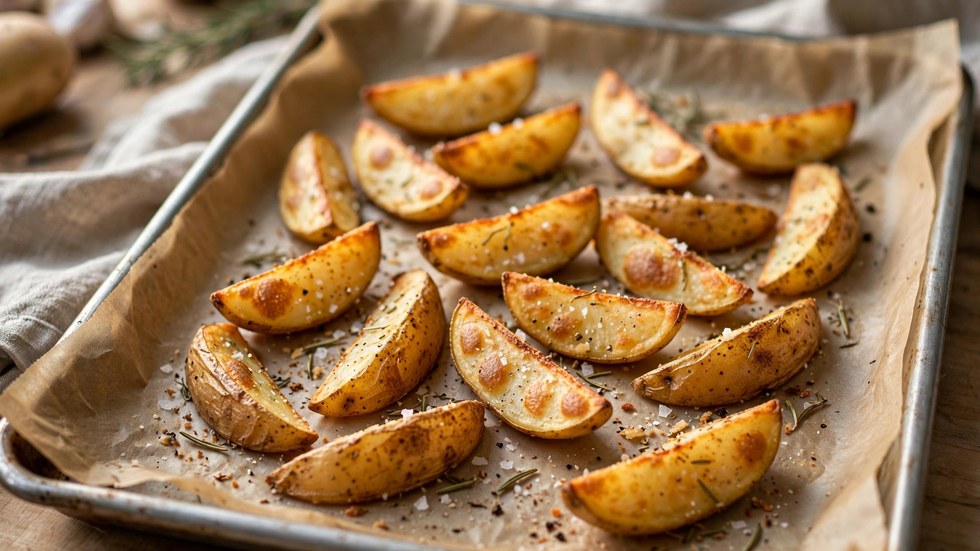
Rule two: store the gravy separately, always. Gravy poured over potatoes on Sunday is glue by Tuesday. Portion the gravy into its own containers and pour it hot at serving time. This single habit is the difference between sad leftovers and a bowl that genuinely satisfies.
Rule three: curds go on at the end. Cheese curds lose their famous squeak when refrigerated — that’s just physics, and no recipe can fully prevent it. What you can do is portion the curds separately and let the hot gravy warm them at serving time. They’ll soften and melt slightly at the edges, which is honestly the best part of a fresh poutine anyway.
Ingredients
| Ingredient | Amount (4 bowls) | Notes |
|---|---|---|
| Russet potatoes | 1.2 kg (about 4 large) | Russets crisp best; Yukon Golds work too |
| Olive oil | 2 tbsp | Just enough to coat |
| Cornstarch | 1 tbsp | The crisping secret — toss wedges in it |
| Garlic powder, paprika, salt, pepper | To taste | Season the wedges generously |
| Lean ground turkey or chicken | 400 g | The protein boost; beef works too |
| Cremini mushrooms, finely diced | 250 g | Adds deep savoury flavour to the gravy |
| Yellow onion, diced | 1 medium | — |
| Beef stock, low-sodium | 750 mL | PC or Campbell’s |
| Worcestershire sauce | 1 tbsp | — |
| Soy sauce | 1 tsp | For colour and depth |
| Cornstarch + cold water | 2 tbsp + 3 tbsp | Gravy thickener |
| Fresh cheese curds | 200 g | The real thing — St-Albert or local |
| Green onions, sliced (optional) | 2 | Fresh garnish at serving |
How to Build Your Healthy Copycat Poutine Bowl
Step 1: The wedges
Heat the oven to 230°C (450°F) — hotter than you think you need. Cut the potatoes into even wedges, about 8 per potato. Soak them in cold water for 15 minutes if you have the time; this rinses off surface starch and is the difference between good and great crispness. Drain, pat thoroughly dry (wet potatoes steam, dry potatoes crisp), and toss with the olive oil, 1 tbsp cornstarch, and seasonings until every wedge is lightly coated. Spread on two parchment-lined sheet pans with real space between pieces — crowding is the enemy. Bake 30–35 minutes, flipping once, until deeply golden and crisp at the edges. Cool completely before packing.
Step 2: The high-protein gravy
Brown the ground turkey in a large pot or Dutch oven over medium-high heat, breaking it into fine crumbles, 6–8 minutes. Add the onion and mushrooms and cook until the mushrooms release their liquid and start to brown, another 6–8 minutes. This browning is where the flavour lives — don’t rush it. Pour in the beef stock, Worcestershire, and soy sauce, scraping up every browned bit. Simmer 10 minutes, then whisk in the cornstarch slurry and simmer 2–3 minutes until the gravy coats a spoon. Season with salt and pepper. It should be thinner than a Thanksgiving gravy — remember, it needs to pour and seep.
Step 3: Portion like you mean it
Divide the cooled wedges among four containers. Portion the gravy into four separate small containers. Bag the cheese curds in four small portions. Everything stays separate until serving time — this is the whole game.
Serving: The Hot Gravy Moment
Reheat the wedges in the oven or air fryer at 200°C (400°F) for 8–10 minutes until re-crisped — the microwave will not do here; it makes them steamy. Heat the gravy until steaming in a small pot or the microwave. Build the bowl: hot wedges, scatter over the curds, ladle over the hot gravy, and finish with green onions. The heat of the gravy softens the curds into those glorious melty edges. Eat immediately. This is a bowl that rewards ceremony.
Approximate Nutrition Per Bowl
Kitchen-math estimates based on the recipe above. Real cheese curds are included — this is still poutine, after all.
| Nutrient | Per bowl (approx.) |
|---|---|
| Calories | 560 |
| Protein | 32 g |
| Carbohydrates | 62 g |
| Fat | 20 g |
| Fibre | 6 g |
| Sodium | 920 mg |
A classic restaurant poutine of similar size typically lands around 800–1,000 calories with 40+ grams of fat. We’re not claiming this tastes identical — it’s lighter, and proud of it — but the format satisfaction is absolutely there.
Cost Breakdown: $ CAD Per Bowl
| Item | Cost for batch | Per bowl |
|---|---|---|
| Potatoes (1.2 kg) | $2.50 | $0.63 |
| Ground turkey (400 g) | $4.50 | $1.13 |
| Mushrooms, onion, stock, pantry | $2.40 | $0.60 |
| Cheese curds (200 g) | $4.00 | $1.00 |
| Total | $13.40 | ~$3.35 |
Cheese curds are the luxury line item — worth every cent. Plug your numbers into
Canadian Meal Prep & Macro Estimator
Enter your costs in $ CAD and get per-portion cost, macros and freezer guidance.
Variations
- Smoked meat style: swap the turkey for chopped smoked meat or pastrami in the gravy — very Montreal, very good.
- Veggie build: double the mushrooms, use vegetable stock, and add lentils for protein. Still deeply savoury.
- Breakfast poutine: top the reheated bowl with a fried egg and swap green onions for chives.
- Extra-crispy wedges: a light dusting of parmesan in the last 5 minutes of baking adds crunch and flavour.
- Freezer option: the gravy freezes for 3 months. Wedges don’t freeze well — always bake those fresh-ish (they hold 4 days refrigerated).
Meal-Prep Storage Notes
Wedges and gravy keep 4 days refrigerated in separate containers. Curds are best within 3–4 days; keep them in their own bag, not touching anything wet. Re-crisp wedges in the oven or air fryer — never the microwave. The gravy reheats in 90 seconds in the microwave; whisk it after heating to restore the texture. If the gravy thickens too much in the fridge, whisk in a tablespoon of hot water while reheating.
Frequently Asked Questions
Can I make this healthy copycat poutine bowl ahead for the whole week?
Yes — 4 days is the sweet spot. Bake the wedges, make the gravy, portion everything separately, and assemble hot at serving time. The separate-storage method is what makes it work.
Do I have to use real cheese curds?
For the true experience, yes — torn mozzarella is a substitute, not a replacement. Curds are the soul of poutine. Use less of them if you like, but use the real thing.
Why cornstarch on the potato wedges?
A light cornstarch coating absorbs surface moisture and fries up shatteringly crisp in the oven’s heat. It’s the same trick used for crispy baked chicken wings, and it makes a genuine difference.
Can the gravy be made vegetarian?
Easily. Use a rich vegetable or mushroom stock, double the mushrooms, and add a spoonful of miso paste for the savoury depth that beef stock normally provides.


You May Also Like

Copycat Keg Garlic Cheese Toast & Soup: Healthy Steakhouse Prep

Copycat Tim Hortons Turkey Bacon Club Bowls on a Budget
