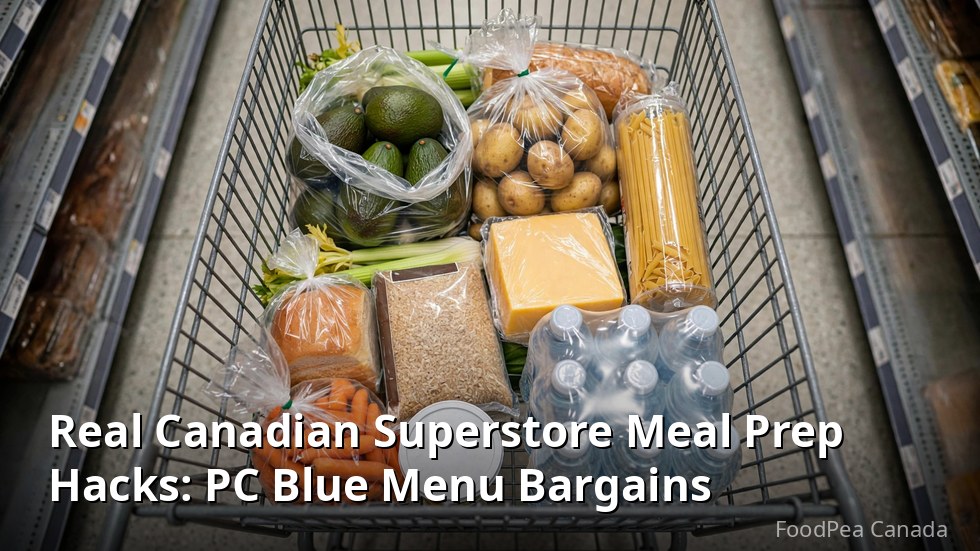
Real Canadian Superstore Meal Prep Hacks: PC Blue Menu Bargains
Among Canadian grocery banners, Real Canadian Superstore occupies a sweet spot for meal preppers: warehouse-scale selection, aggressive flyer pricing, and a house brand ecosystem that rewards loyalty. These Superstore meal prep hacks focus on the levers that actually move your weekly bill — PC Blue Menu product strategy, bulk buying, markdown timing, and the store’s price-matching counter.
Superstore is also a Loblaw banner, which means PC Optimum is the loyalty currency and the flyer cycle typically runs Thursday to Wednesday in most markets. The store’s size can be overwhelming, so the goal here is a repeatable system: know which aisles deserve your attention, which products to buy in bulk, and when to show up for the markdowns.
- PC Blue Menu products are formulated with nutrition-minded shoppers in mind and are often priced below comparable national-brand “healthy” lines — ideal for meal prep staples.
- Bulk bins and family packs at Superstore beat per-unit pricing on rice, oats, frozen veg, and canned goods; always check the shelf unit price.
- Markdown timing matters: early mornings and late evenings are when meat and bakery stickers appear.
- Superstore’s customer service desk price-matches competitor flyers — bring the flyer or the Flipp app and ask.
The PC Blue Menu Strategy for Meal Preppers
President’s Choice Blue Menu is Loblaw’s better-for-you line — products positioned around lower sodium, higher fibre, or reduced fat compared with mainstream equivalents. For meal prep purposes, what matters is not the health halo but the value equation: Blue Menu items frequently undercut the national-brand “light” or “healthy” alternatives sitting one shelf over, sometimes by 30% or more.
Here is how to work the line into a weekly prep routine:
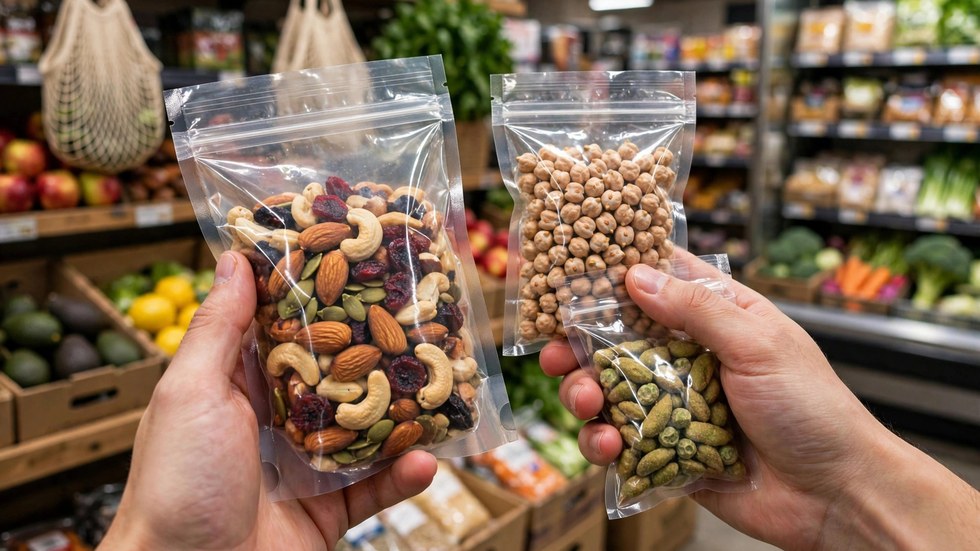
- Blue Menu canned beans and tomatoes typically run a few cents below the regular PC line while carrying the lower-sodium positioning. For chilli, soups, and burrito bowls, the difference in your final dish is negligible and the price is right.
- Blue Menu frozen entrées are not the play. They are convenient but priced per-portion far above cooking from scratch. The line’s value is in ingredients, not ready meals.
- Blue Menu whole grain pastas, brown rice blends, and high-fibre cereals are worth comparing against the No Name equivalents — sometimes the Blue Menu item is only marginally more expensive and meaningfully better in texture.
- Watch for Blue Menu in the flyer. When the line gets a feature spot, multi-buy deals (like 2 for $5) can make it the cheapest option in the category outright.
Blue Menu vs Regular: A Typical Price Comparison
| Product Category | Blue Menu (Est.) | Regular PC / National Brand (Est.) | Meal Prep Verdict |
|---|---|---|---|
| Canned black beans (540 mL) | ~$1.29 CAD | ~$1.49 CAD | Buy Blue Menu; lower sodium, lower price |
| Diced tomatoes (796 mL) | ~$1.79 CAD | ~$1.99 CAD | Buy Blue Menu for batch sauces |
| Whole wheat pasta (900g) | ~$2.29 CAD | ~$2.79 CAD | Buy Blue Menu when featured |
| Frozen mixed vegetables (2 kg) | ~$5.99 CAD | ~$5.49 CAD (No Name) | No Name wins on price; nutrition similar |
| Plain Greek yogurt (750g) | ~$5.49 CAD | ~$4.99 CAD (regular PC) | Regular PC wins unless Blue Menu is on sale |
| High-fibre cereal (525g) | ~$4.79 CAD | ~$5.99 CAD (national brand) | Blue Menu beats national brands clearly |
The pattern is consistent: Blue Menu’s best value is against national brands, not against No Name. Use No Name for pure commodity staples and Blue Menu where the formulation actually differs — lower-sodium cans, whole grain pastas — at a price that still beats the big brands.
Canadian Meal Prep & Macro Estimator
Enter your costs in $ CAD and get per-portion cost, macros and freezer guidance.
Superstore Meal Prep Hacks for Bulk Buys That Pay Off
Superstore’s scale means family packs and large formats are everywhere. Not all of them are genuine deals, so the rule is simple: read the unit price on the shelf tag and only buy the large format when the per-100g or per-unit cost is clearly lower.
Bulk wins for meal preppers
- Family-pack chicken thighs and drumsticks: Often priced $1–$2/lb below the small trays. Portion and freeze on prep day.
- Large-format frozen vegetables (2 kg bags): Consistently cheaper per gram than 750g bags, and frozen veg has zero spoilage risk.
- 10 lb bags of potatoes and 2 kg bags of rice: Shelf-stable, endlessly versatile, and the unit economics are excellent.
- Club-size canned goods (flats of tuna, cases of tomatoes): Worth it if you genuinely use them weekly; dead stock in the pantry is not savings.
- Large tubs of plain yogurt: The 750g tub is nearly always cheaper per 100g than individual cups — sometimes by half.
Bulk traps to avoid
- Bagged salad and fresh berries in large formats: They spoil before a single person finishes them. Buy small, buy frozen.
- “Value pack” deli meats: The per-100g price sometimes barely moves, and opened deli meat lasts 3–5 days.
- Bakery multi-packs: Great price, terrible shelf life. Freeze half the buns on day one or skip them.
Markdown Timing: The 50% Off Stickers
Superstore marks down meat, bakery, and deli items approaching their best-before dates, often at 30–50% off. These stickers are first-come, first-served, and timing your visit changes everything.
- Early morning (store opening to ~9 a.m.): Overnight markdowns from the previous evening are on the shelf. Meat department staff typically sticker remaining short-dated product before the morning rush.
- Late evening (after 7 p.m.): Bakery and prepared foods get marked down to clear before close. Rotisserie chickens, in particular, can drop to half price.
- Freeze immediately. A 50%-off pack of chicken breasts is only a deal if it goes into your freezer within hours. Markdown meat bought on Sunday should be cooked or frozen the same day — no exceptions.
- Ask the meat counter. Staff sometimes know what’s about to be marked down. A polite question costs nothing.
A realistic expectation: one or two markdown scores per month can shave $10–$20 off a monthly protein bill. It is not a system you can plan the whole week around, but it is a meaningful supplement.
Price Matching at the Customer Service Desk
Real Canadian Superstore has a price-match policy that lets you match a competitor’s advertised flyer price on identical items — a genuinely useful tool for meal preppers who plan around flyers. How to use it well:
- Build your list from the flyers first. Browse Superstore’s flyer plus competitors (No Frills, FreshCo, Food Basics, Walmart Canada) in the Flipp app.
- Identify the gaps. If Walmart Canada has chicken thighs $1/lb cheaper this week, that’s a match candidate.
- Bring proof. The Flipp app on your phone showing the competitor’s current flyer price is generally accepted. Screenshots of expired flyers are not.
- Match at customer service, not the till. Go to the customer service desk before or after shopping with the item and the flyer evidence. Policies can vary slightly by location, so a quick question at the desk confirms the current process.
- Match identical items only. Same brand, same size, same variety. A price match on “chicken thighs” needs the same cut and comparable pack.
Used consistently, price matching lets you do one Superstore trip instead of three store hops — saving fuel, time, and the impulse buys that come with extra trips.
The PC Optimum Layer
Superstore is the flagship PC Optimum store, and the program’s personal offers are the quiet engine of long-term savings:
- Check weekly offers every Thursday when the new flyer cycle starts. Load every offer remotely relevant — unloaded offers earn nothing.
- Points days and bonus events (often advertised in the flyer) can return the equivalent of 20–30% on a big stock-up shop.
- Redeem points on the expensive weeks. 10,000 points = $10 off. Saving redemptions for weeks when protein prices spike smooths your monthly average.
- The PC Mastercard or PC Money Account adds points per dollar, but only makes sense if you pay the balance in full — interest wipes out grocery savings instantly.
A Sample Superstore Meal Prep Shop
Putting the hacks together, here is what a focused weekly shop looks like for one person prepping high-protein meals:
| Strategy | Items | Est. Weekly Cost (CAD) |
|---|---|---|
| Flyer protein (price-matched if cheaper elsewhere) | Family-pack chicken thighs or pork loin | $10–$12 |
| Blue Menu canned goods | Beans, diced tomatoes, tuna | $7–$9 |
| Bulk frozen veg + No Name staples | 2 kg mixed veg, rice, oats | $12–$14 |
| Dairy + eggs | Large yogurt tub, dozen eggs | $8–$10 |
| Hardy produce | Cabbage, carrots, onions, bananas, potatoes | $8–$10 |
| Total | $45–$55 |
That leaves headroom under a $60 budget for PC Optimum redemptions to stretch further — or for the occasional markdown score to drop the real cost into the $40s.
Frequently Asked Questions
Does Real Canadian Superstore price match?
Yes — Superstore’s customer service desk generally price-matches identical items advertised in a competitor’s current flyer. Bring the flyer or show it in the Flipp app, and confirm the process at your local store’s desk since details can vary by location.
Is PC Blue Menu actually healthier?
Blue Menu products are formulated to meet specific nutrition criteria (such as lower sodium or higher fibre) compared with mainstream equivalents. For meal preppers, the practical benefit is getting those formulations at prices well below national-brand “healthy” lines.
When is the best time to find markdowns at Superstore?
Early mornings tend to have overnight meat markdowns on the shelf, while late evenings bring bakery and prepared-food discounts. Stock moves fast, so there is no guaranteed window — but those two periods are your best odds.
Are Superstore bulk buys always cheaper?
No. Always check the unit price on the shelf tag. Family packs of meat, large frozen veg bags, and big rice bags are usually genuine deals; large-format fresh produce, deli packs, and bakery multi-packs often are not once spoilage is factored in.


You May Also Like

Buying Frozen vs Fresh Produce in Canadian Winters: Nutrition & Cost

How to Preserve Canadian Root Vegetables for Months in Winter