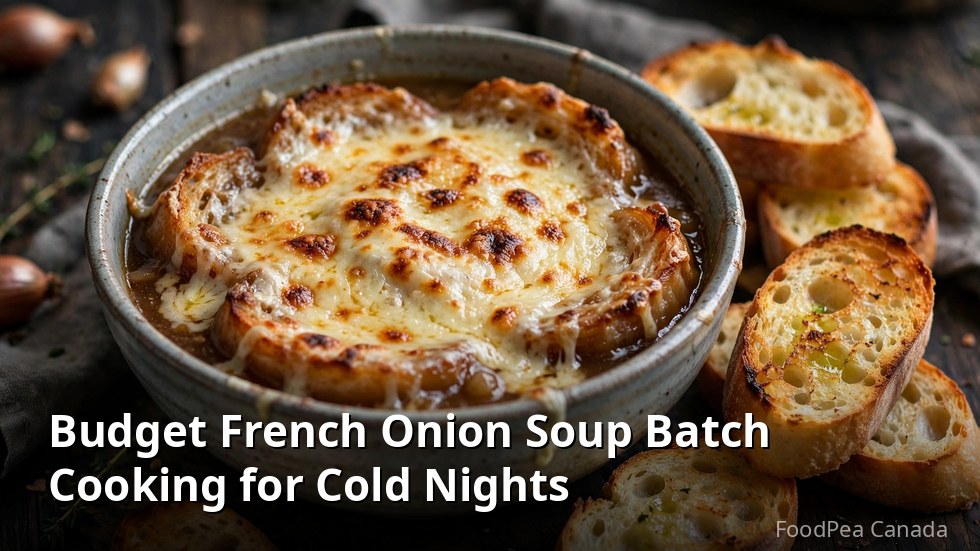
Budget French Onion Soup Batch Cooking for Cold Nights
French onion soup has a reputation as restaurant food — the kind of thing that arrives in a little crock with a dramatic cheese pull and a $14 price tag. At home, it is one of the cheapest soups you can batch cook, because its soul is just onions, patience, and broth. When you batch cook french onion soup in the slow cooker, the caramelization that normally demands an hour of stirring happens while you are at work, and a giant pot of it costs less than a single bistro bowl.
Onions are practically free in winter. A 10-pound bag at No Frills or Walmart Canada routinely sells for under $5 CAD, and this recipe uses most of it. Beef broth is the only other meaningful expense, and store-brand cartons keep the batch affordable. The result is a deep, mahogany, savoury-sweet soup that reheats beautifully all week — the cheese toast goes on fresh at serving time, so every bowl tastes just made.
- A full slow-cooker batch costs under $15 CAD and makes 10–12 bowls.
- Overnight caramelization in the slow cooker means zero stovetop babysitting.
- Freeze the soup base without the bread and cheese for up to 3 months.
- Broil the cheesy toast fresh per bowl for that restaurant finish.
Why the Slow Cooker Is the Secret to Great French Onion Soup
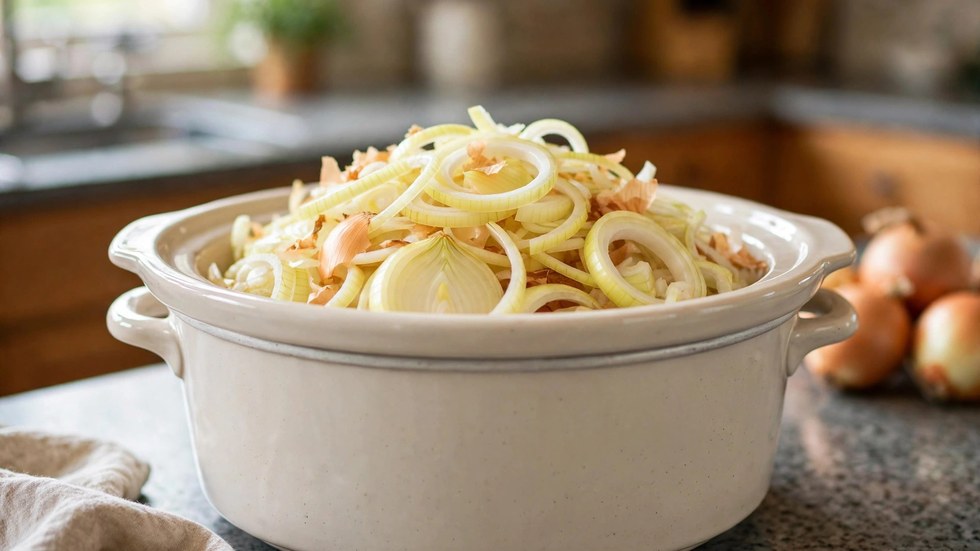
The entire magic of French onion soup is caramelization — the slow transformation of sharp raw onion into something sweet, jammy, and deeply browned. On the stovetop, that takes 45 to 60 minutes of regular stirring and careful heat management. In the slow cooker, sliced onions with a little butter cook down overnight into a caramelized mass with no stirring at all. You wake up (or come home) to the hard part already done.
Batch cooking amplifies the advantage. Caramelizing onions for two bowls feels like a lot of effort for a little soup; caramelizing a full slow cooker of onions feels like an investment that pays out in lunches and dinners for a week. The per-bowl effort collapses to nearly nothing once the batch exists.
Ingredients and Cost Breakdown
Estimates from Ontario flyers at No Frills, Walmart Canada, and Real Canadian Superstore. The Gruyère is the one splurge — and even it is optional, as the table notes.
| Ingredient | Amount | Estimated Cost (CAD) |
|---|---|---|
| Yellow onions | 3 kg (about 8–10 large) | $4.00 |
| Butter | 80 g | $1.30 |
| Beef broth (store brand) | 2 × 900 mL cartons | $4.50 |
| Dry white wine or extra broth | 250 mL (1 cup) | $1.50 |
| Fresh thyme (or 1 tsp dried) | 6 sprigs | $0.75 |
| Bay leaves | 2 | $0.10 |
| Baguette, sliced and toasted | 1 loaf | $1.75 |
| Gruyère or Swiss cheese, grated | 250 g | $4.50 |
| Salt and black pepper | to taste | $0.10 |
| Total | 10–12 bowls | ≈ $18.50 |
That is roughly $1.55 to $1.85 per bowl including the cheesy toast — against $12 to $16 in a restaurant. Swap the Gruyère for regular Swiss or even mozzarella and the batch drops under $15 total. The soup base alone, before bread and cheese, costs barely a dollar a bowl.
Canadian Meal Prep & Macro Estimator
Enter your costs in $ CAD and get per-portion cost, macros and freezer guidance.
How to Make It: Step by Step
- Slice the onions. Halve each onion through the root end and slice into thin half-moons, about 5 mm thick. Uniform slices cook evenly. This is the only real labour in the recipe — put on a podcast and get through the pile.
- Load the slow cooker. Toss the sliced onions with the melted butter (or just dot the butter over the top) and 1 teaspoon of salt. Fill the cooker — it will look absurdly full. It cooks down to a fraction of its volume.
- Caramelize overnight. Cook on LOW for 10 to 12 hours, or on HIGH for 5 to 6 hours. The onions will collapse into a deep golden-brown, jammy mass. A little liquid will collect at the bottom; that is concentrated flavour, not a problem.
- Deglaze. Pour in the white wine (or extra broth) and stir, scraping up any browned bits from the sides of the insert. Those bits are the best-tasting part of the whole pot.
- Add broth and herbs. Stir in both cartons of beef broth, the thyme sprigs, and the bay leaves. Cook on HIGH for 1 more hour so the flavours marry. Fish out the thyme stems and bay leaves, then season with salt and plenty of black pepper.
- Toast the bread. Slice the baguette into 2 cm rounds and toast them in the oven at 200°C (400°F) until golden and dry, about 8 minutes. Dry toast is important — it soaks up soup without disintegrating.
- Assemble and broil. Ladle the hot soup into oven-safe bowls, float a toast round or two on each, pile on the grated cheese, and broil 2 to 3 minutes until the cheese is melted, bubbling, and spotted brown. Watch it closely — broilers go from perfect to scorched in seconds.
Food-Safety Notes
Soup is straightforward from a safety standpoint, but the usual rules apply: cool the batch within two hours of finishing by dividing it into shallow containers, refrigerate for up to 4 days, and freeze what you will not eat in time. Always thaw frozen soup in the fridge overnight and bring it back to a full boil (steaming hot throughout) when reheating. Toast the bread and melt the cheese fresh each time — never freeze the assembled bowls.
Batch Cooking Strategy for the Week
Portion the cooled soup base — no bread, no cheese — into 500 mL containers or freezer bags laid flat. Each container is one generous bowl or two smaller ones. In the fridge, they are ready lunches: pour into a bowl, microwave until steaming, top with toast and cheese, and broil. The whole serving ritual takes under 10 minutes, most of it the broiler doing its thing.
For variety, the soup base is more versatile than it looks. Ladle it over mashed potatoes as a gravy-style sauce. Use it as the cooking liquid for pot roast. Reduce a portion by half on the stovetop and toss it with buttered egg noodles for a quick onion-noodle bowl. One batch, several different meals.
The Wine Question
Traditional French onion soup uses wine to deglaze, and it does add a layer of acidity and complexity that broth alone cannot quite match. But it is not mandatory. If you would rather skip it, replace the cup of wine with extra beef broth plus a tablespoon of apple cider vinegar or white wine vinegar — the acid is the important part, not the alcohol. Either way, the long caramelization carries the dish.
If you do use wine, it does not need to be good wine. A basic dry white — the kind sold in small cartons at the liquor store — is perfect. Never cook with anything labelled “cooking wine,” which is salted and unpleasant; a cheap drinkable wine is both cheaper-tasting-better and the right call.
Cheese Choices on a Budget
Gruyère is the classic and it earns its reputation: nutty, excellent melting, beautiful browning. It is also one of the pricier cheeses in the Canadian dairy case. Good news — this soup is forgiving. Regular Swiss (Emmental-style) melts similarly for less money. A mix of mozzarella for stretch and a little Parmesan for savoury depth gets you 90 percent of the way there at a fraction of the price. Even old cheddar works in a pinch, though it browns faster under the broiler, so watch it.
Whatever cheese you choose, grate it yourself. Pre-shredded cheese is coated with anti-caking starch that inhibits smooth melting, and block cheese is cheaper per gram anyway. Two minutes with a box grater is worth it.
Why You Should Batch Cook French Onion Soup This Winter
Every winter cooking strategy comes down to the same question: how much comfort can you get per dollar and per minute of effort? When you batch cook french onion soup, the answer is about as good as it gets. A $4 bag of onions, an overnight slow cooker session you sleep through, and you have a week’s worth of the kind of soup people pay restaurant prices for — finished each night with two minutes under the broiler.
It also happens to make the house smell incredible, which on a cold February night is worth something all by itself. Keep the bread and cheese on hand, keep the soup base in the freezer, and the coldest months get a little easier to face.


You May Also Like

Batch Cooking Beef Barley Soup for Winter Work Lunches
Slow Cooker Pulled Pork Meal Prep: 8 Meals for Under $20 CAD
