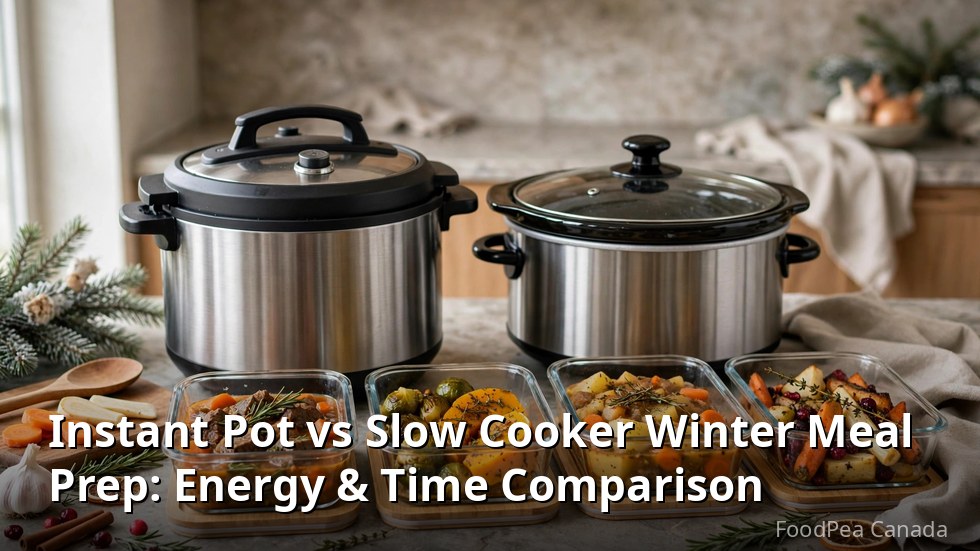
Instant Pot vs Slow Cooker Winter Meal Prep: Energy & Time Comparison
The instant pot vs slow cooker meal prep debate usually gets argued with vibes instead of numbers, so let us fix that. Both appliances turn cheap winter ingredients into tender, batchable meals, but they do it with very different trade-offs in time, energy use, texture, and hands-on effort. This guide compares them head to head on real winter meal-prep scenarios, estimates the actual electricity cost of a batch in Canadian dollars, and gives you three recipes with timings for both methods so you can pick the right tool for each job instead of picking a side.
- A typical slow cooker batch (8 hours on LOW) uses roughly 1.5-2 kWh; a pressure-cooker batch (1 hour) uses roughly 1-1.3 kWh. Both cost well under a dollar in electricity.
- The slow cooker wins on flavour depth and set-and-forget convenience; the Instant Pot wins on speed and weeknight flexibility.
- For winter meal prep, the best system uses both: slow cooker for weekend batch cooking, Instant Pot for fast weeknight rescues.
- Tough cuts like blade roast and pork shoulder work beautifully in either appliance with adjusted timings.
- Three head-to-head recipes below include exact times for both methods so you can compare directly.
Instant Pot vs Slow Cooker Meal Prep: The Energy Math
Let us run the numbers with honest estimates. A standard slow cooker draws roughly 180-250 watts on LOW. Run it for 8 hours and you have used about 1.4-2.0 kilowatt-hours. An Instant Pot draws around 1,000 watts while heating, but a pressure-cooked stew only needs about 35-45 minutes at pressure plus heat-up and release time, so a full batch lands around 1.0-1.3 kWh. At a typical Canadian residential electricity rate of roughly $0.10-$0.15 per kWh, the slow cooker batch costs about $0.15-$0.30 and the Instant Pot batch about $0.10-$0.20. These are estimates, and your rate and appliance will vary, but the takeaway is clear: the electricity difference between the two is measured in cents, not dollars. Pick your appliance for time and texture, not for the hydro bill.
| Scenario | Slow Cooker | Instant Pot (Pressure Cook) |
|---|---|---|
| Typical power draw | ~180-250 W on LOW | ~1,000 W while heating |
| Batch cook time (stew) | 7-8 hours | ~1 hour incl. heat-up and release |
| Estimated energy per batch | ~1.4-2.0 kWh | ~1.0-1.3 kWh |
| Estimated electricity cost | ~$0.15-$0.30 CAD | ~$0.10-$0.20 CAD |
| Hands-on time | ~15 min, then ignore it | ~15 min, plus venting and checks |
| Best for | Weekend batch cooking | Weeknight dinners, forgotten thawing |
One more energy consideration that matters in a Canadian winter: the slow cooker gives off gentle heat for eight hours, which is not nothing when the furnace is running anyway. The Instant Pot concentrates its heat into one hour. Neither will change your heating bill in a measurable way, but the slow cooker does make the kitchen feel cozier on a minus-twenty day.
Canadian Meal Prep & Macro Estimator
Enter your costs in $ CAD and get per-portion cost, macros and freezer guidance.
Time Comparison: Three Winter Recipes, Both Methods
Here is where the rubber meets the road. The same three batch recipes, timed both ways, so you can see exactly what each appliance asks of you.
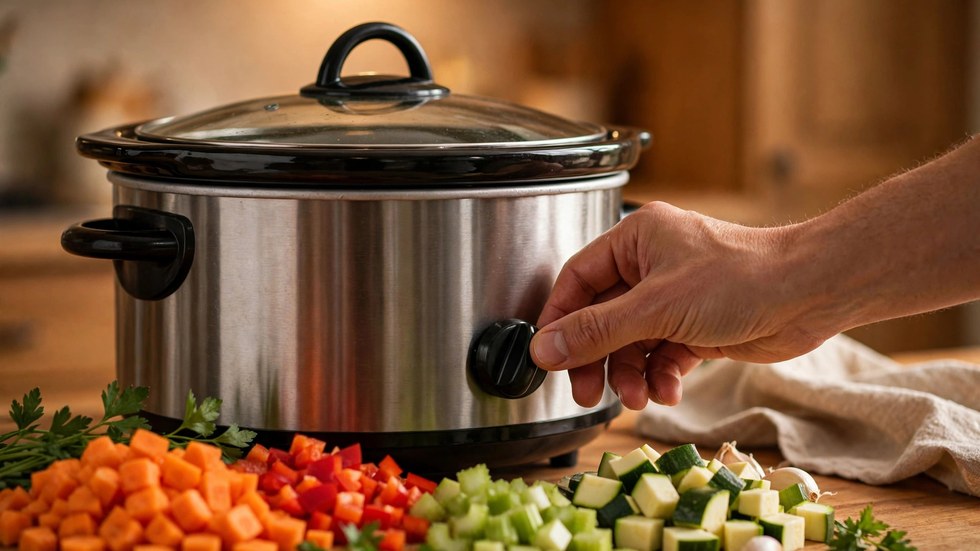
1. Beef and Root Vegetable Stew (serves 6)
- 800 g stewing beef, 4 carrots, 3 potatoes, 2 onions, 2 cups beef broth, tomato paste, thyme, salt, pepper
- Slow cooker: 15 min prep, 8 hours on LOW, zero attention. Total elapsed: 8 hr 15 min. Hands-on: 15 min.
- Instant Pot: 15 min prep, optional 10 min saute to brown the beef, 35 min at high pressure, 15 min natural release. Total elapsed: ~1 hr 15 min. Hands-on: ~30 min.
- Verdict: The slow cooker version has a slightly silkier broth and needs no babysitting. The Instant Pot version gets dinner on the table tonight. For Sunday batch prep, the slow cooker wins; for a Wednesday emergency, the pressure cooker is the hero.
2. Pulled Pork Shoulder (2 kg, serves 8)
- 2 kg bone-in pork shoulder, spice rub, onion, 1/2 cup apple cider vinegar
- Slow cooker: 10 min prep, 9-10 hours on LOW. Total elapsed: ~10 hr. Hands-on: 10 min.
- Instant Pot: 10 min prep, cut the shoulder into 4 chunks, 75 min at high pressure, 20 min natural release. Total elapsed: ~2 hr. Hands-on: ~25 min.
- Verdict: Both shred beautifully. The slow cooker gives a marginally better bark and deeper flavour, but the Instant Pot turns a forgotten morning into pulled pork tacos by dinner. If you meal-prep on weekends, use the slow cooker; if you decide at noon that you want pulled pork tonight, the Instant Pot saves the plan.
3. Lentil and Vegetable Chili (serves 8)
- 1.5 cups mixed lentils, 2 tins beans, 1 tin tomatoes, sweet potato, carrots, onion, chili spices, 3 cups broth
- Slow cooker: 15 min prep, 7-8 hours on LOW. Total elapsed: ~8 hr. Hands-on: 15 min.
- Instant Pot: 15 min prep, 5 min saute for the aromatics, 15 min at high pressure, 10 min natural release. Total elapsed: ~45 min. Hands-on: ~25 min.
- Verdict: Near-identical results. Lentils are the great equalizer: they go tender and creamy under pressure almost as well as they do over eight hours. This is the recipe where the Instant Pot’s speed advantage is pure profit.
Texture and Flavour: Where Each Appliance Shines
Long, gentle slow cooking coaxes out flavours that pressure cannot fully replicate. Caramelized notes from browned meat meld into the broth over hours, and tough cuts relax into silk rather than simply softening. That is why pot roast and beef stew devotees tend to stay loyal to the slow cooker. Pressure cooking, on the other hand, is superb at beans, lentils, grains, and anything where speed matters more than browning. It also handles frozen meat safely, which the slow cooker should not attempt: an Instant Pot can take a rock-solid bag of chicken thighs to dinner in about an hour, a genuine weeknight superpower. There is also a texture middle ground worth knowing about: the Instant Pot’s slow-cook mode. It will not match a dedicated ceramic slow cooker for even, gentle heat, but on days when the counter is crowded, it keeps you in the game without a second appliance.
The Winter Meal-Prep System That Uses Both
Stop choosing and start combining. Here is the weekly rhythm that gets the most out of both appliances through a Canadian winter. Sunday is slow cooker day: load it in the morning with a pork shoulder, a beef stew, or a double batch of chili, and portion the results into the fridge and freezer by evening. That covers lunches and three or four dinners. Wednesday is Instant Pot day: pressure-cook a fast lentil soup, a curry, or a batch of rice to pair with the weekend’s proteins, or rescue the week if you forgot to thaw something. The slow cooker does the heavy weekend lifting with zero supervision; the Instant Pot provides midweek agility. Together they mean you never eat a sad desk lunch in February again.
Which Appliance Should You Buy First?
If you own neither and the budget allows one purchase, the answer depends on your schedule, not on the food. Buy the slow cooker first if you work long days away from home and want dinner waiting when you walk in; nothing beats setting it at 7 a.m. and forgetting it exists until 6 p.m. Its simplicity is also a virtue: one dial, no learning curve, and second-hand slow cookers are plentiful at thrift stores for under fifteen dollars. Buy the Instant Pot first if your evenings are unpredictable and you need the option to start dinner at 5:30 and eat at 6:30; the pressure cooker function alone justifies it, and the sauté mode means one-pot browning without a separate skillet. If you already own a slow cooker and are eyeing an Instant Pot, the upgrade pays for itself the first time you turn a forgotten-to-thaw bag of chicken thighs into soup in an hour. Either way, you are spending well under a hundred dollars on an appliance that will cook hundreds of winter meals.
Food Safety Notes for Both Appliances
Whichever tool you use, the same rules apply. Thaw meat in the fridge before it goes into the slow cooker; never slow-cook from frozen. Pressure cookers can safely cook from frozen because they move through the danger zone quickly, but add extra time and always verify temperature. Cooked food should be cooled within two hours, refrigerated 3-4 days or frozen up to 3 months, and reheated to steaming hot, at least 74°C for meat dishes. Keep slow cooker lids closed during cooking, and let pressure release naturally for at least 10-15 minutes with meats so they stay tender.


You May Also Like
Canadian Winter Pot Roast Guide: Cheap Cut Tenderizing Hacks

Slow Cooker Vegetarian Shepherd’s Pie Prep with Sweet Potato Topping