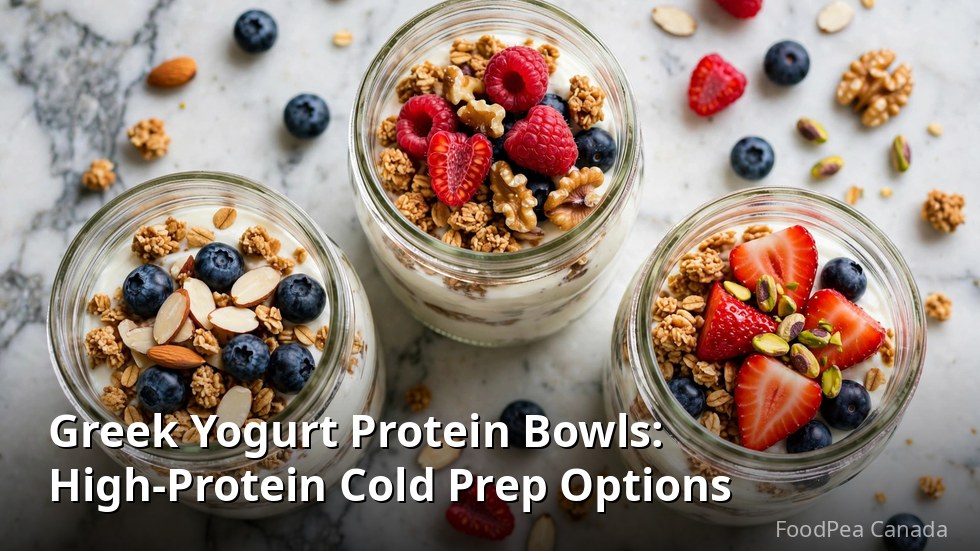
Greek Yogurt Protein Bowls: High-Protein Cold Prep Options
Some weeks, the oven stays off. Maybe it is a heat wave in July, maybe the kitchen is mid-reno, or maybe you simply cannot face another sheet pan of roasted anything. That is when greek yogurt meal prep bowls earn their place in the rotation: genuinely no cooking, five minutes of assembly per jar, and protein numbers that rival a chicken breast. A single cup of plain Greek yogurt carries roughly 20 to 23 grams of protein depending on the brand, which means the base of your breakfast or snack is doing most of the work before you add a single topping.
The catch is that a tub of yogurt and a handful of granola does not automatically make a good meal prep. Yogurt weeps liquid, granola goes soggy, and fruit oxidizes into something sad. The fixes are simple once you know them: layer strategically, keep crunch separate, and choose toppings that improve over a day or two in the fridge rather than falling apart. This guide walks through six cold-prep formulas, an assembly-line method, and the storage rules that keep day-five jars tasting like day one.
Key Takeaways
- One cup of plain Greek yogurt delivers roughly 20 to 23g of protein; the right add-ins push bowls to 25g+.
- Layer fruit at the bottom and yogurt on top, and always pack granola and nuts separately.
- Six no-cook formulas below cost roughly $1.80 to $2.75 CAD per serving and keep up to 5 days.
- Buy plain yogurt in the large tub; flavoured single cups cost more per gram and add sugar you do not need.
Building Better Greek Yogurt Meal Prep Bowls
The base matters more than the toppings. Plain Greek yogurt, ideally 2% or higher fat, gives you the best protein density and the creamiest texture after a few days in the fridge. Non-fat versions work, but they tend to taste chalky and thin by day three. Skyr is an excellent alternative if you find it on sale; it is technically a different cultured product, but it behaves the same in a jar and often carries a gram or two more protein per serving.
Read the label before you buy. Some “Greek-style” yogurts are just regular yogurt with thickeners and carry half the protein of the real strained product. Look for at least 15 grams of protein per 175-gram serving; the good ones list 17 to 23. Store brands from PC, Kirkland at Costco Canada and Walmart Canada’s house brand all clear this bar at a fraction of the name-brand price. A 750-gram tub typically runs $4.50 to $6, which works out to roughly $1.10 to $1.50 per cup-sized serving.
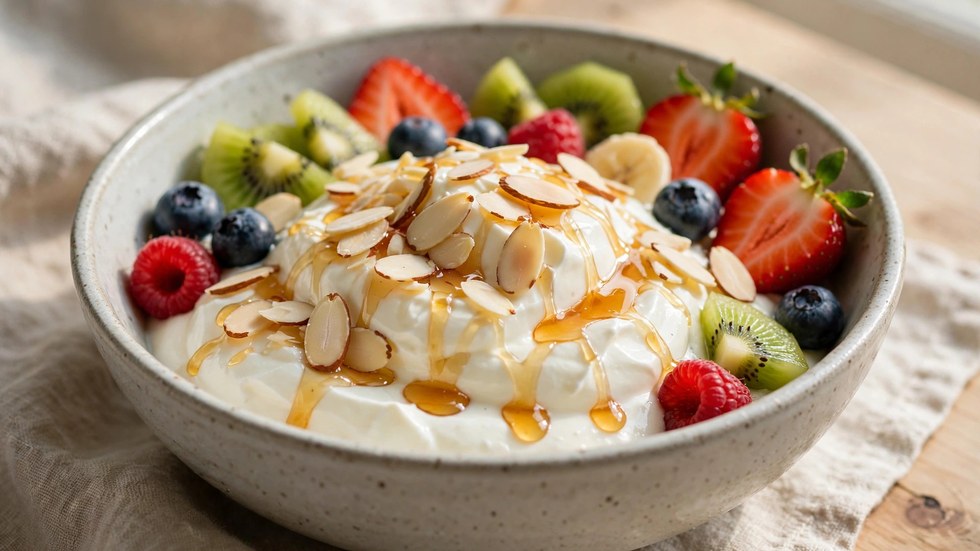
The layering order is the difference between a good jar and a watery mess. Fruit goes on the bottom, where its juices mingle harmlessly. Yogurt goes in the middle, a full cup per jar. Anything that should stay crunchy, granola, nuts, seeds, cacao nibs, goes in a small separate container or a silicone muffin cup perched on top. Stir-ins like chia seeds, hemp hearts and protein powder go directly into the yogurt, where they thicken it rather than floating around.
Six Cold-Prep Formulas
Each formula below makes five jars. Protein figures are approximate and vary by brand. Nothing here requires heat, a stove or more than ten minutes of your Sunday.
1. Classic Berry and Almond Crunch
The baseline that everything else is measured against. One cup of plain 2% Greek yogurt over a half cup of frozen mixed berries, stirred with a tablespoon of honey and topped at serving time with a quarter cup of granola and a tablespoon of sliced almonds. The frozen berries thaw over the first day and create a natural compote at the bottom of the jar. Roughly 26 grams of protein per jar, about $2.25 per serving. This is the one to start with if you have never prepped yogurt bowls before.
2. Peanut Butter Banana Power Jar
Two tablespoons of natural peanut butter stirred into the yogurt, half a sliced banana layered at the bottom, a tablespoon of hemp hearts mixed through, and crushed peanuts packed separately for crunch. The banana will brown slightly by day three, which is purely cosmetic; a squeeze of lemon juice over the slices slows it down. About 28 grams of protein per jar, roughly $2.10 per serving. This one eats like dessert and keeps teenagers from raiding the pantry after school.
3. Apple Pie Spice Jar
A love letter to autumn that works year-round. Diced apple tossed with cinnamon, nutmeg and a teaspoon of maple syrup goes on the bottom; the yogurt gets a tablespoon of chia seeds stirred in. Pack a quarter cup of oat-based granola separately. The chia thickens the yogurt into something close to mousse by day two. Roughly 24 grams of protein, about $1.95 per serving, and the cheapest formula on this list when apples are in season.
4. Chocolate Cherry Overnight Jar
For the person who wants breakfast to feel like a treat. A tablespoon of cocoa powder and a teaspoon of maple syrup whisked into the yogurt, a half cup of frozen dark sweet cherries on the bottom, and cacao nibs packed separately for crunch. The cherries bleed into the yogurt and turn the whole jar a gorgeous deep purple by morning. About 25 grams of protein, roughly $2.50 per serving. Frozen cherries from Costco Canada make this affordable; fresh ones in winter would double the price.
5. Savoury Mediterranean Jar
Yogurt bowls do not have to be sweet. A cup of plain Greek yogurt with a drizzle of olive oil, a pinch of za’atar or dried oregano, halved cherry tomatoes and diced cucumber layered underneath, and a tablespoon of toasted sunflower seeds packed separately. It eats like a deconstructed tzatziki and works as a high-protein snack or a light lunch. Roughly 23 grams of protein, about $2.75 per serving. Add a hard-boiled egg on the side and it becomes a genuinely complete lunch.
6. Tropical Mango and Coconut Jar
Frozen mango chunks on the bottom, yogurt stirred with a tablespoon of shredded unsweetened coconut and a teaspoon of honey, toasted coconut flakes packed separately. The mango thaws into a bright, juicy layer that cuts through the richness of the yogurt. About 24 grams of protein, roughly $2.40 per serving. This is the jar to prep when February has worn you down and you need breakfast to remind you that summer exists.
Protein, Cost and Best-By Comparison
| Formula | Approx. Protein per Jar | Approx. Cost per Serving (CAD) | Best Within |
|---|---|---|---|
| Berry and Almond Crunch | ~26g | ~$2.25 | 5 days |
| Peanut Butter Banana | ~28g | ~$2.10 | 4 days |
| Apple Pie Spice | ~24g | ~$1.95 | 5 days |
| Chocolate Cherry | ~25g | ~$2.50 | 5 days |
| Savoury Mediterranean | ~23g | ~$2.75 | 4 days |
| Mango and Coconut | ~24g | ~$2.40 | 5 days |
The 30-Minute Assembly Line
Do not make these one jar at a time. Line up five wide-mouth mason jars or reusable containers on the counter and work in stages, like a tiny factory.
- Fruit first (10 minutes). Divide your chosen fruit across the five jars. Frozen fruit goes in straight from the bag; fresh fruit gets diced in one batch.
- Yogurt second (5 minutes). Spoon one cup of yogurt into each jar. If you are adding stir-ins like chia, hemp hearts, cocoa or peanut butter, mix them into the whole tub first, then portion. It is faster and more even.
- Seal and chill (2 minutes). Lids on, straight into the fridge. The jars need at least four hours for flavours to meld; overnight is better.
- Crunch last (5 minutes, Sunday). Portion granola, nuts and seeds into five small containers or bags. Keep them at room temperature, not in the fridge, so they stay crisp.
- Morning routine (30 seconds). Grab a jar, dump the crunch on top, eat. There is no step five beyond that, which is the entire point.
Troubleshooting Common Jar Problems
Liquid pooling on top. This is whey separating, and it is harmless. Stir it back in; it contains protein. If it bothers you, strain the yogurt through a coffee filter for an hour before portioning, or switch to a thicker brand.
Soggy granola. It touched the yogurt. There is no rescue, only prevention: separate containers, always. Silicone muffin cups that sit inside wide-mouth jars work well if you hate washing extra dishes.
Bland by day four. Cold dulls flavour. Pack a little extra honey, a lemon wedge or a pinch of flaky salt to wake the jar up at serving time. A tiny pinch of salt in sweet yogurt bowls sounds wrong and tastes right.
Banana browning. Cosmetic only, but if it puts you off, use the lemon juice trick or swap banana for mango or berries in jars meant for days four and five.
Boosting Protein Without Protein Powder
Not everyone wants to buy a tub of powder, and you do not need one to push these bowls higher. A tablespoon of hemp hearts adds about 3 grams of protein and disappears into the yogurt. Two tablespoons of natural peanut butter adds about 8 grams. A quarter cup of chopped almonds adds about 6. Stirring a quarter cup of cottage cheese into the yogurt base, blended smooth, adds another 6 to 7 grams and nobody will ever know it is there.
If you do use protein powder, unflavoured or vanilla whey blends in most cleanly; a single scoop adds roughly 20 to 25 grams and turns any of these jars into a legitimate post-workout meal. Whisk it into the yogurt thoroughly before portioning to avoid chalky pockets.
Price out your ideal week of jars with the calculator below; you may be surprised how far a single large tub stretches.
Canadian Meal Prep & Macro Estimator
Enter your costs in $ CAD and get per-portion cost, macros and freezer guidance.
Cold prep is the lowest-effort entry point in all of meal prep, and Greek yogurt is the ingredient that makes it work nutritionally. Thirty minutes on Sunday, five grab-and-go breakfasts, and not a single burner turned on. Pick the berry classic or the peanut butter jar this weekend and let the fridge do the rest.
You May Also Like
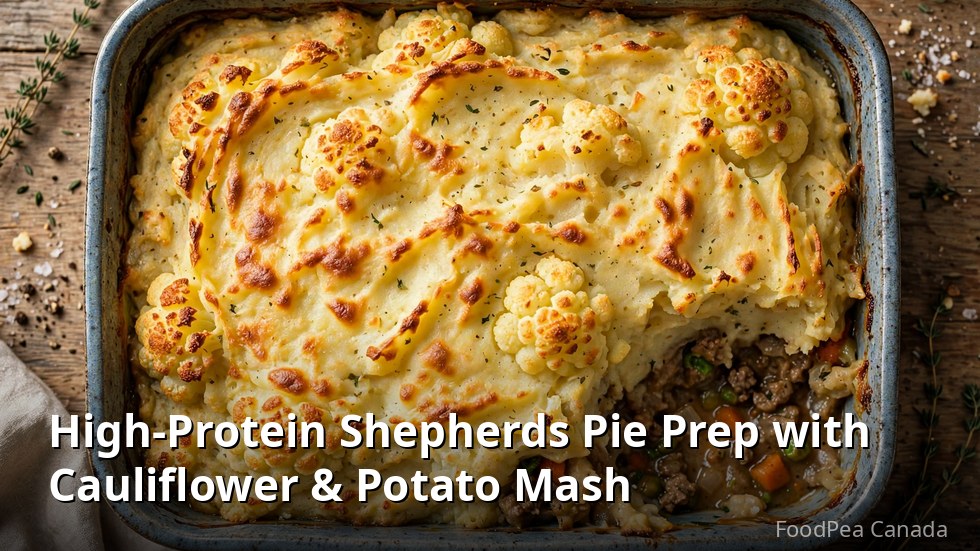
High-Protein Shepherds Pie Prep with Cauliflower & Potato Mash

High-Protein Canned Tuna and Salmon Salad Preps (No Mayo)