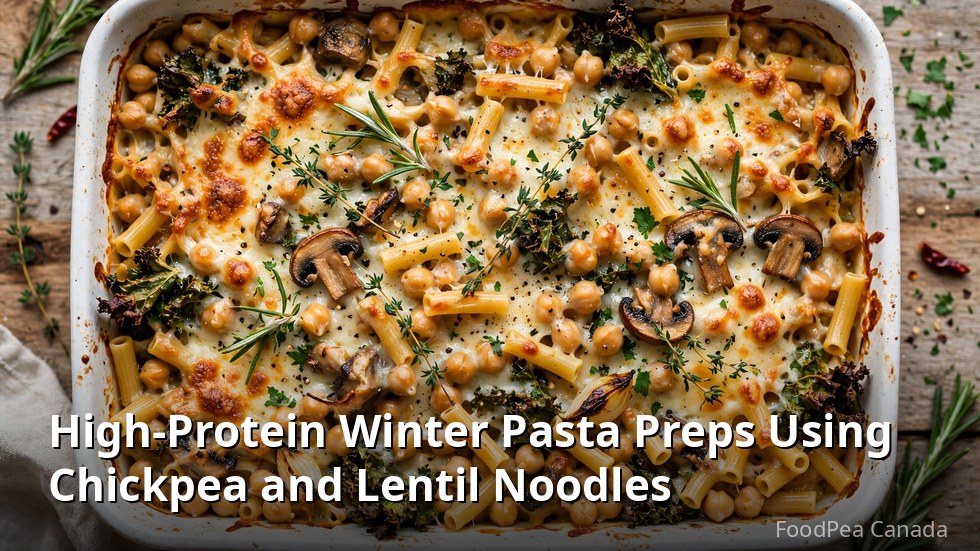
High-Protein Winter Pasta Preps Using Chickpea and Lentil Noodles
Pasta has always been the comfort-food king of winter, but regular noodles leave high-protein eaters choosing between their macros and their cravings. A proper high protein pasta meal prep solves that: chickpea and red lentil noodles pack roughly double the protein of wheat pasta, and with the right sauces and cooking technique they reheat beautifully all week long.
This guide covers which legume noodles actually hold up to batch cooking (not all of them do), how to cook them so they do not turn to mush by Wednesday, three winter-ready sauce and protein combinations, and the storage method that keeps baked pasta portions tasting fresh. Everything is built for Canadian winter meal prep — hearty, warming, and cheap enough to make every Sunday from November through March.
Key Takeaways
- Chickpea noodles offer roughly 13–14 g protein per 85 g dry serving; red lentil noodles offer roughly 12–13 g.
- Cook legume noodles 1–2 minutes shy of the package time and rinse in cold water to stop carryover cooking.
- Saucy bakes reheat far better than plain tossed noodles — always prep pasta with extra sauce.
- Pair noodles with a second protein (turkey, chicken sausage, lentils) to reach 25–30 g protein per portion.
- Properly stored, pasta preps keep 4 days refrigerated and freeze well for up to 2 months.
Why Chickpea and Lentil Noodles Beat Regular Pasta for Prep
A standard 85 g serving of dry wheat pasta gives you about 12 g of protein if you are lucky — usually closer to 7–8 g for white pasta. Chickpea noodles (the Banza-style ones now stocked at Real Canadian Superstore, Walmart Canada, and Costco Canada) deliver roughly 13–14 g of protein plus about 8 g of fibre per serving. Red lentil noodles land in a similar range, around 12–13 g of protein, with a mild earthy flavour that disappears under sauce.

That difference matters enormously across a week. Swap wheat penne for chickpea penne in five lunches and you have added roughly 30 g of protein to your week without changing anything else — no extra meat, no powder, no effort. The fibre is a bonus for satiety: these noodles genuinely keep you full longer, which is exactly what you want from winter comfort food.
Cost-wise, legume pasta runs about $3–$4.50 per 340 g box at Canadian grocers, roughly double wheat pasta. But since each serving carries twice the protein, the cost per gram of protein is competitive — and Costco Canada’s multi-packs bring it down further.
The Golden Rule of High Protein Pasta Meal Prep
Legume noodles have one weakness: they overcook fast and they keep cooking after you drain them. Mushy chickpea noodles are the reason some people write off the whole category. The fix is simple and non-negotiable — cook them 1–2 minutes less than the package directions, then rinse immediately under cold water to stop the cooking dead.
The second rule: never prep plain noodles. Tossed noodles without sauce dry out, stick together, and absorb fridge odours. Always combine the noodles with sauce before portioning — ideally more sauce than you think you need, because the noodles will drink up some of it overnight. A pasta bake format (noodles + sauce + cheese, baked in one dish, then portioned) is the most forgiving structure of all and reheats the best.
Three Winter Pasta Preps to Rotate
1. Turkey and Chickpea Penne Bake
Brown 500 g of lean ground turkey with diced onion, garlic, and Italian seasoning. Stir in a 700 ml jar of passata or crushed tomatoes, a drained 540 ml can of white kidney beans, and a teaspoon of dried basil. Meanwhile cook 340 g of chickpea penne 2 minutes shy of done and rinse cold. Combine everything in a 9×13 dish, top with about 150 g of shredded mozzarella and 30 g of parmesan, and bake at 190°C (375°F) for 20 minutes until bubbly. Portion into six containers. Each portion lands around 28–30 g of protein — the turkey, beans, chickpea noodles, and cheese all stacking together.
2. Red Lentil Rotini with Sausage and Kale
This one tastes like a deconstructed Italian wedding soup. Brown 4 chicken or turkey sausages (about 400 g), sliced into coins, then set aside. In the same pot, soften onion, carrot, celery, and garlic; add a 900 ml carton of chicken broth, a can of diced tomatoes, and 340 g of red lentil rotini cooked just shy of done. Simmer 10 minutes, stir in 3 big handfuls of chopped kale until wilted, and return the sausage. The broth keeps everything moist through the week — this is a soupy pasta, deliberately. Roughly 25 g of protein per portion across six servings, and it reheats like a dream because there is liquid to spare.
3. Creamy Chickpea Noodle Alfredo with Chicken
For the nights when only creamy pasta will do. Poach or bake 500 g of chicken breasts, then dice. Cook 340 g of chickpea fettuccine or penne shy of done. Make a lighter alfredo: sauté garlic in butter, whisk in 30 ml flour, then 500 ml milk and 100 g of light cream cheese, stirring until smooth; finish with 50 g parmesan, nutmeg, and plenty of black pepper. Combine with the chicken and noodles, plus a bag of frozen peas stirred through for colour and sweetness. Six portions, roughly 27 g protein each. The sauce thickens as it sits, so add a splash of milk when reheating.
| Prep | Protein per portion (approx.) | Portions | Est. cost per portion (CAD) | Freezer-friendly? |
|---|---|---|---|---|
| Turkey & chickpea penne bake | ~28–30 g | 6 | $3.00–$3.75 | Yes, up to 2 months |
| Red lentil rotini, sausage & kale | ~25 g | 6 | $2.75–$3.50 | Yes, up to 2 months |
| Chickpea alfredo with chicken | ~27 g | 6 | $3.25–$4.00 | Okay (sauce may separate slightly) |
Choosing Noodles That Survive the Week
Not all legume pastas are equal for meal prep. Short shapes — penne, rotini, fusilli — hold up far better than long strands, because spaghetti-style legume noodles tend to break and clump after a day in the fridge. Thicker shapes also survive reheating better than thin ones.
Among Canadian-available brands, the chickpea penne and rotini from the major legume-pasta brands are the most reliable preppers: firm bite, neutral flavour, and they do not fall apart. Red lentil penne is a close second with a slightly softer texture. Edamame spaghetti has the highest protein of all (around 20+ g per serving) but is the most fragile — save it for fresh meals rather than batch prep. Whatever you buy, check the ingredient list: the best ones are just chickpea or lentil flour and water, nothing else.
Storing and Reheating Pasta Preps
Cool portions within an hour, then refrigerate in airtight containers for up to 4 days. The bake and the soupy rotini both freeze excellently for up to 2 months — freeze in individual portions so you can grab one at a time. Thaw overnight in the fridge.
To reheat, add a splash of water, broth, or milk before microwaving — this is the step everyone skips and the reason reheated pasta gets gummy. Cover loosely and heat at medium power, stirring halfway. For the penne bake, 8–10 minutes in a 190°C oven (covered with foil) gives you a freshly-baked texture that the microwave cannot match. The alfredo benefits most from the added milk; stir well and it comes back creamy.
Boosting Protein Without Breaking the Budget
The noodles do heavy lifting, but a second protein source is what pushes portions into the 25–30 g range. The cheapest options per gram of protein at Canadian stores: dried red lentils stirred into any tomato sauce (about $2 for a bag that lasts weeks), canned white kidney beans, frozen turkey or chicken sausages from Costco Canada, and eggs — a chopped hard-boiled egg on top of any pasta bowl adds about 6 g of protein for roughly 30 cents.
Cottage cheese is another sleeper hit: blend 250 ml into tomato sauce and it disappears completely while adding roughly 25 g of protein to the whole batch. It sounds strange; it works. Run your own numbers through the calculator below to find your cheapest protein-per-dollar combination.
Canadian Meal Prep & Macro Estimator
Enter your costs in $ CAD and get per-portion cost, macros and freezer guidance.
Mistakes That Ruin Legume Noodle Preps
- Cooking to the package time. Legume noodles go from perfect to mush in about 90 seconds. Always pull them early.
- Skipping the cold rinse. Without it, residual heat keeps cooking the noodles in the colander.
- Prepping dry noodles. Sauce is structural, not optional. Noodles stored naked turn into a solid brick.
- Using long fragile shapes. Edamame spaghetti is great fresh; for prep, stick to penne and rotini.
- Reheating without liquid. A splash of water, broth, or milk before reheating prevents gumminess every time.
Winter is long in Canada, and so is the stretch between Sunday prep and Friday lunch. A freezer stocked with high-protein pasta portions — real comfort food that happens to carry 25–30 g of protein — makes both considerably more bearable.

You May Also Like
Low-Carb High-Protein Meatloaf Prep in Mini Loaf Pans

Prepping 40g Protein Sheet Pan Chicken Fajitas for the Week