
Prepping 40g Protein Sheet Pan Chicken Fajitas for the Week
Some meal preps feel like a second job. This one does not. A proper sheet pan chicken fajitas meal prep is one tray, one oven, about 30 minutes — and it produces a week of lunches with 40 g of protein per serving. Sizzling-spiced chicken, charred peppers and onions, and endless ways to serve it: bowls, wraps, salads, quesadillas.
This guide covers the exact chicken-to-vegetable ratio that hits the 40 g target, the homemade fajita seasoning that beats any packet, the high-heat roasting method that gives you char without drying the chicken, and how to portion and reheat everything so Friday’s lunch is as good as Monday’s. If you only adopt one high-protein prep this month, make it this one.
Key Takeaways
- About 200 g of raw chicken per serving plus black beans and Greek yogurt toppings reaches roughly 40 g of protein.
- Roast at 230°C (450°F) for 18–22 minutes — high heat gives char and keeps chicken juicy.
- Homemade fajita seasoning costs pennies and has no filler or excess salt.
- One sheet pan makes 5 portions in about 30 minutes total, at roughly $3–$3.50 CAD each.
- Store components separately where possible; keep tortillas and fresh toppings packed apart.
Why Sheet Pan Fajitas Are the Perfect High-Protein Prep
The sheet pan is the meal-prep cook’s best friend: maximum surface area, even heat, minimal dishes. Fajitas are its ideal passenger because everything cooks at the same rate when cut correctly — chicken strips and pepper strips both want high heat and about 20 minutes. No staggered timing, no juggling pots, no sink full of dishes.
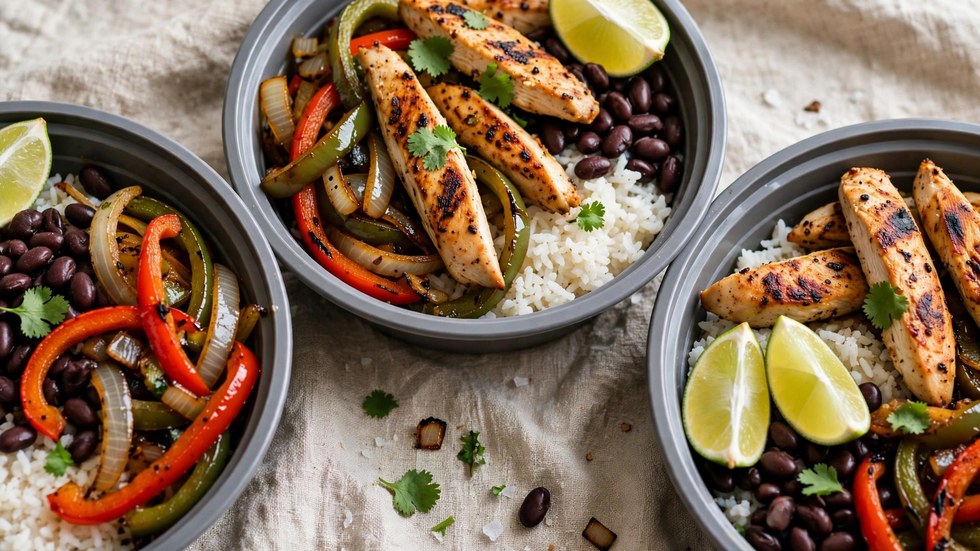
The 40 g protein target is reachable because fajita servings are naturally generous. A proper portion starts with about 200 g of raw chicken breast. Raw breast runs about 23 g of protein per 100 g, so 200 g raw gives roughly 46 g; cooking drives off water and concentrates it, leaving a 150 g cooked portion with roughly 40 g of protein. Add black beans, cheese, or Greek yogurt as toppings and you are comfortably at or above 40 g per serving without trying hard.
The 40g Formula: What Goes on the Tray
For 5 portions, you need: 1 kg of boneless, skinless chicken breasts, 3 large bell peppers (mixed colours), 2 large red onions, and 3 tablespoons of oil. That is the tray. The protein math per portion works out like this:
| Component (per portion) | Amount | Approx. protein | Notes |
|---|---|---|---|
| Chicken breast, cooked | ~150 g | ~40 g | From 200 g raw per portion |
| Black beans | 60 g (1/4 cup) | ~5 g | Added at serving or packed alongside |
| Greek yogurt (as sour cream) | 30 g (2 tbsp) | ~3 g | Packed separately, added fresh |
| Cheddar or Monterey Jack | 15 g | ~4 g | Sprinkled on reheated portions |
| Loaded bowl total | — | ~50 g | Chicken alone hits ~40 g |
The chicken alone delivers the headline 40 g; the beans, yogurt, and cheese are bonus protein that also make the meals genuinely enjoyable. Nobody wants to chew through 40 g of naked chicken breast five days straight — the toppings are what make this sustainable.
Sheet Pan Chicken Fajitas Meal Prep: The Method
Step 1: Make the Seasoning
Skip the packets — they are mostly salt and cornstarch. For the full tray, mix: 2 tablespoons chili powder, 1 tablespoon smoked paprika, 2 teaspoons ground cumin, 2 teaspoons dried oregano, 1 teaspoon garlic powder, 1 teaspoon onion powder, 1 teaspoon salt, 1 teaspoon black pepper, and 1/2 teaspoon cayenne (adjust to your heat tolerance). This makes more than you need for one batch; store the extra in a jar and your next fajita night is already seasoned. Cost: pennies, versus $2+ per packet at the store.
Step 2: Cut Everything for Even Cooking
Slice the chicken breasts against the grain into strips about 1.5 cm thick — uniform strips cook uniformly, and cutting against the grain keeps them tender. Slice the peppers into similar-width strips and the onions into wedges (wedges hold up better than thin slices, which can burn at high heat). Similar sizes, similar cook times — that is the entire logic of sheet pan cooking.
Step 3: Season and Spread
Toss the chicken strips with 2 tablespoons of oil and about two-thirds of the seasoning. Toss the vegetables with the remaining oil and seasoning in the same bowl. Spread everything on a large rimmed baking sheet — use two sheets if it is crowded. Crowding is the enemy of char: pieces need space for moisture to escape, or they steam. If your sheet pan is standard half-size, this 1 kg batch genuinely needs two pans. It is worth the extra dish.
Step 4: Roast Hot and Fast
Roast at 230°C (450°F) for 18–22 minutes, flipping or stirring once halfway. You want the edges of the peppers blistered and the chicken cooked through to 74°C (165°F) internal. The high heat is doing two jobs: charring the vegetables for that fajita-stand flavour and cooking the chicken fast enough that it stays juicy. A squeeze of lime juice over the hot tray the moment it comes out wakes everything up.
Serving It Five Ways (So You Don’t Get Bored)
The tray is the constant; the serving format is the variable. This is how one batch becomes five different-feeling meals:
- Monday — Fajita rice bowls: chicken and veg over cilantro-lime rice with black beans, corn, and Greek yogurt.
- Tuesday — Loaded wraps: warmed flour tortillas with chicken, veg, shredded lettuce, cheese, and salsa. Pack tortillas separately.
- Wednesday — Fajita salad: chicken and veg over chopped romaine with avocado, tortilla strips, and a lime-olive oil dressing.
- Thursday — Quesadillas: chicken, veg, and cheese folded into tortillas and crisped in a dry skillet, 2–3 minutes per side.
- Friday — Nacho bowls: chicken and veg over tortilla chips with beans, cheese, jalapeños, and yogurt. Friday deserves nachos.
The chicken-and-veg base is identical every day; only the vehicle changes. Your grocery list barely grows, but your week feels varied.
Portioning and Storage
Cool the tray for 20 minutes, then portion the chicken and vegetables into five airtight containers. Pack the variable components separately: rice or tortillas in their own containers or bags, fresh toppings (lettuce, avocado, yogurt, salsa) packed the morning of or in small side containers. Tortillas stored touching hot fajita filling go gummy — always pack them apart.
Refrigerated, the chicken and vegetables keep 4 days; since this makes 5 portions, plan to freeze Friday’s portion or eat it by Thursday night and freeze one. Honestly, the simplest approach: freeze portion five on Sunday. It thaws by Thursday night in the fridge and tastes freshly made on Friday.
Reheating
Microwave the chicken and veg covered at medium power until steaming — about 2 minutes — then assemble your bowl or wrap. For quesadilla and nacho days, reheating the filling in a hot dry skillet for 2–3 minutes restores the charred edges far better than the microwave. Add fresh toppings after reheating, never before.
The Cost: High Protein, Low Spend
The tray: 1 kg chicken breast value pack ($9–$12 on sale at No Frills or Real Canadian Superstore), 3 peppers ($3–$4), 2 onions ($1.50), pantry spices and oil ($1), plus rice, beans, tortillas, and toppings for the week ($8–$10). Total: roughly $23–$28 CAD for five loaded 40 g-protein meals — about $4.50–$5.50 per meal all-in, or roughly $3–$3.50 for the chicken-and-veg base alone. The equivalent Chipotle-style bowl costs $14+. You do the math.
Canadian Meal Prep & Macro Estimator
Enter your costs in $ CAD and get per-portion cost, macros and freezer guidance.
Mistakes That Ruin Sheet Pan Fajitas
- Crowding the pan. The number one error. Two pans with space beat one pan piled high, every time.
- Thin-sliced onions. They burn at 450°F before the chicken is done. Wedges, not slivers.
- Packet seasoning. Over-salted, under-flavoured, overpriced. The homemade blend takes 2 minutes.
- Skipping the lime. Acid at the end is what makes fajitas taste like fajitas instead of seasoned chicken.
- Packing tortillas with hot filling. Steam turns them gummy. Separate containers, always.
Forty grams of protein, one tray, thirty minutes, five lunches that do not feel like meal prep. This is the recipe to send to anyone who says eating high-protein is complicated or expensive — it is neither.
Making It Work in a Small Canadian Kitchen
Not everyone has a sprawling kitchen with double ovens. If you’re working with a standard apartment oven, the trick is a half-sheet pan and cooking in two quick batches rather than cramming everything onto one crowded tray — crowded trays steam instead of char, and char is the whole point. Chicken strips can be prepped the night before and held in the marinade in the fridge, which means the actual cooking day is just: heat oven, spread, roast, portion. In winter, when produce prices spike, frozen bell pepper strips from the big bag at Walmart Canada or No Frills work surprisingly well here; they roast up with decent edges and cost a fraction of fresh out-of-season peppers. Keep a bag in the freezer and this becomes a true pantry-and-freezer meal, the kind you can assemble on a Tuesday night without a grocery run.
You May Also Like

High-Protein Beef and Broccoli Meal Prep Bowls Better Than Takeout
Batch-Prepping Ground Turkey and Quinoa Bowls for Muscle Growth
