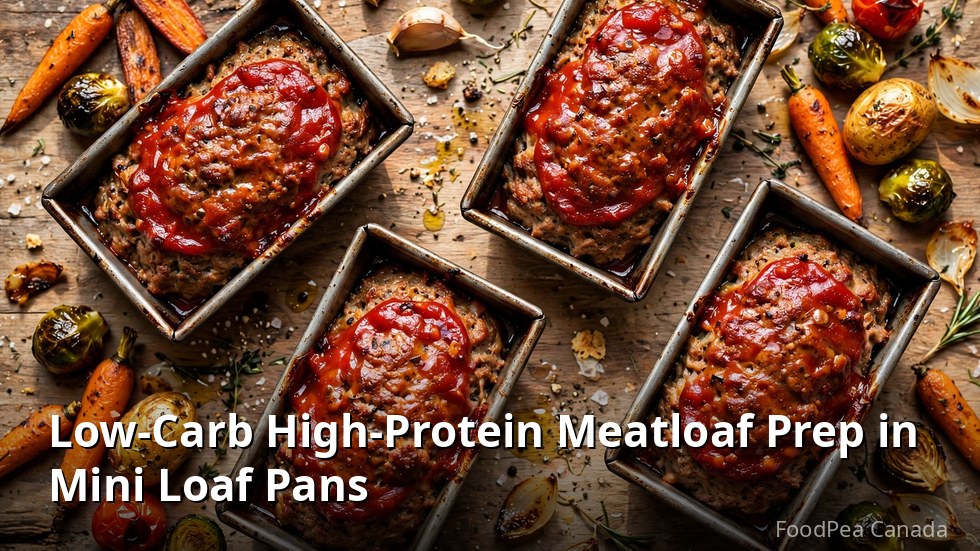
Low-Carb High-Protein Meatloaf Prep in Mini Loaf Pans
Meatloaf has an image problem, and most of it is undeserved. Done right, it is one of the most practical high-protein foods you can batch cook — and a mini meatloaf meal prep in individual loaf pans might be the smartest format of all. Perfect portions, faster cooking, better crust on every serving, and a low-carb build that keeps the protein high without the breadcrumb filler.
This guide gives you the full low-carb meatloaf formula: what replaces the breadcrumbs, how to keep lean meat juicy, why mini pans beat one big loaf for meal prep, and the glaze, storage, and reheating details that make these better on day three than most fresh dinners. Ten mini loaves, about an hour, roughly 30 g of protein each.
Key Takeaways
- Mini loaf pans cut bake time to 25–30 minutes and give every portion a flavourful crust.
- Almond flour or crushed pork rinds replace breadcrumbs for a genuinely low-carb loaf.
- Each mini loaf delivers roughly 28–32 g of protein with under 8 g of carbs.
- Ten mini loaves cost roughly $18–$22 CAD total — under $2.25 per high-protein portion.
- They freeze beautifully for up to 3 months and reheat in minutes.
Why Mini Loaf Pans Change the Meatloaf Game
A standard 9×5 meatloaf takes over an hour in the oven, cooks unevenly (dry edges, questionable centre), and portions into irregular slices that never quite fit a meal-prep container. Mini loaf pans — the 5×3 inch size, usually sold in packs of four or eight — solve all three problems at once.
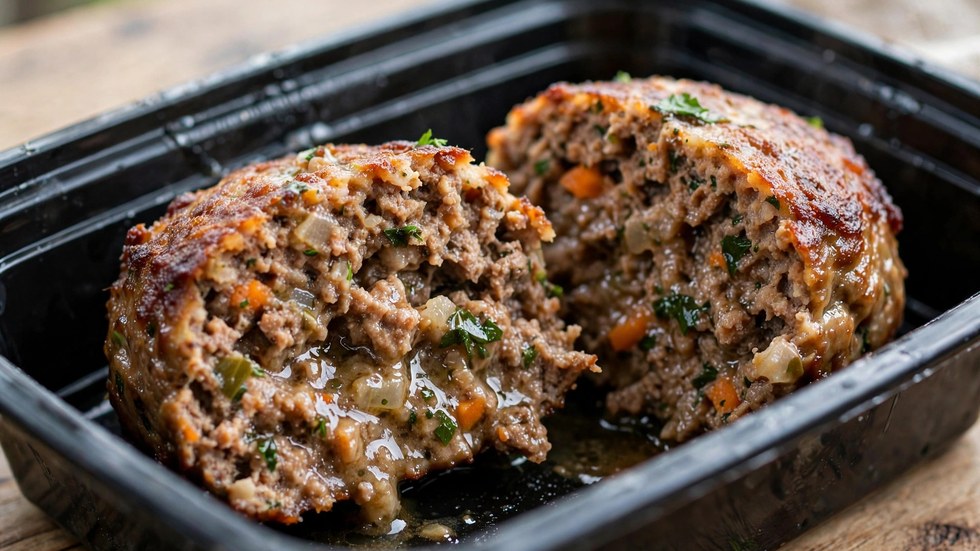
Smaller loaves cook through in 25–30 minutes, so the outside does not overcook before the centre is done. Every mini loaf gets its own caramelized glaze top and browned edges, which is where most of the flavour lives. And portioning becomes automatic: one mini loaf per container, no slicing, no crumbling, no guesswork. If you are eating low-carb, the built-in portion control is a bonus — a whole mini loaf is a satisfying serving without any mental arithmetic.
You can find mini loaf pans at Canadian Tire, Walmart Canada, or the baking aisle of Real Canadian Superstore for a few dollars each. Silicone versions release the loaves effortlessly; metal ones give a slightly better crust. Either works.
The Low-Carb Formula: What Holds It Together
Traditional meatloaf uses breadcrumbs or oats as a binder and filler. For a low-carb version, you need something that absorbs moisture and binds without the starch. Two options work reliably:
- Almond flour (about 80 g per kg of meat): neutral flavour, good binding, adds a little richness. The most foolproof choice.
- Crushed pork rinds (about 60 g per kg of meat): zero carbs, and they vanish completely into the loaf — nobody will identify them. Blitz in a food processor or crush in a bag.
Beyond the binder, the structure needs moisture and fat. Lean meat alone makes a dry, bouncy loaf. Use a mix of extra-lean ground beef and ground pork (or ground turkey thigh), add two eggs per kilo of meat, and include finely minced vegetables — onion, celery, mushrooms — which release moisture as they cook and keep the interior tender. A tablespoon of tomato paste and a teaspoon of Worcestershire sauce per kilo add the savoury depth that breadcrumbs never provided anyway.
Mini Meatloaf Meal Prep: The Full Recipe
This makes 10 mini loaves. You will need two 4-cavity mini loaf pan sets, or bake in two batches.
Ingredients
- 700 g extra-lean ground beef
- 300 g ground pork (or ground turkey thigh)
- 80 g almond flour (or 60 g crushed pork rinds)
- 2 large eggs, beaten
- 1 medium onion, very finely minced
- 150 g mushrooms, very finely minced
- 2 celery stalks, very finely minced
- 3 garlic cloves, minced
- 2 tbsp tomato paste
- 1 tbsp Worcestershire sauce
- 2 tsp salt, 1 tsp black pepper, 1 tsp smoked paprika, 1/2 tsp dried thyme
Glaze
- 80 ml sugar-free ketchup or tomato passata
- 1 tbsp apple cider vinegar
- 1 tsp Dijon mustard
- 1 tsp sweetener of choice (optional — a little monk fruit or just skip it)
Method
- Heat the oven to 200°C (400°F). Grease the mini loaf pans or line with parchment slings.
- Sauté the onion, mushrooms, celery, and garlic in a little oil for 6–8 minutes until soft and most of their moisture has cooked off. Cool 10 minutes — hot vegetables will start cooking the eggs.
- In a large bowl, combine the meats, almond flour, eggs, sautéed vegetables, tomato paste, Worcestershire, and seasonings. Mix with your hands just until combined — overmixing makes a dense, tough loaf.
- Divide evenly among 10 mini cavities (about 130–140 g each). Smooth the tops and make a shallow groove down the centre of each with your thumb — this holds the glaze.
- Whisk the glaze ingredients and brush generously over each loaf.
- Bake 25–30 minutes until the internal temperature hits 71°C (160°F). Rest 10 minutes in the pans, then lift out.
| Nutrient (per mini loaf, approx.) | Amount | Notes |
|---|---|---|
| Protein | ~28–32 g | From beef, pork, and eggs |
| Carbohydrates | ~6–8 g | Mostly from vegetables and glaze |
| Fat | ~14–18 g | Higher with pork; use turkey thigh to lower |
| Fibre | ~2 g | From almond flour and vegetables |
| Calories | ~300–340 | Estimated per loaf |
Those numbers are the whole pitch: a proper dinner-sized portion with 30 g of protein and single-digit carbs, for about two dollars. Few meal preps beat that ratio.
Keeping Lean Meatloaf Juicy
Dry meatloaf is almost always one of three errors. First, meat that is too lean with no compensating moisture — the minced mushrooms and sautéed vegetables in this recipe exist specifically to fix that. Second, overmixing, which develops the proteins into a tight, springy texture more like sausage than meatloaf; mix until it just comes together and stop. Third, overbaking — pull the loaves at 160°F internal, not 170. Carryover heat finishes the job during the rest.
The glaze does quiet moisture work too. Brushed on before baking, it forms a seal that slows surface evaporation while adding a tangy-sweet crust. Apply a second thin coat when the loaves come out of the oven for extra shine and flavour.
What to Serve With Mini Meatloaves
For a low-carb week, pair each loaf with roasted non-starchy vegetables: cauliflower, green beans, zucchini, Brussels sprouts, or a big simple salad. Cauliflower mash (see the technique in our shepherd’s pie prep) is the classic comfort pairing. A simple pan gravy — deglaze with broth, thicken with a teaspoon of xanthan gum or just reduce — takes the whole container up a level.
If not everyone at the table is low-carb, the loaves are completely normal food: serve with mashed potatoes or in a bun as a meatloaf sandwich and nobody will know they are eating a “diet” recipe. That versatility is part of the appeal — one batch feeds the low-carb eater and the teenager equally well.
Storage and Freezing
Cool the loaves within an hour, then refrigerate in airtight containers — one or two per container depending on appetite — for up to 4 days. The glaze keeps the surface moist in the fridge, and the flavour actually deepens by day two as the seasonings settle.
For freezing, wrap each cooled loaf individually in plastic wrap, then bag them together for up to 3 months. Thaw overnight in the fridge. Reheat covered in a 180°C (350°F) oven for 12–15 minutes, or microwave at medium power with a spoonful of broth or gravy. The mini format reheats faster and more evenly than slices of a big loaf — another quiet advantage.
Cost Breakdown
Per 10-loaf batch: 700 g extra-lean ground beef on sale ($8–$10), 300 g ground pork ($3–$4), almond flour ($2 worth from a Costco Canada bag), eggs, mushrooms, onion, celery ($3), pantry seasonings and glaze ($1.50). Total: roughly $18–$22 CAD, or $1.80–$2.20 per 30 g-protein portion. Ground meat value packs at No Frills or Walmart Canada bring this down further — watch the weekly flyers and stock the freezer when beef goes on sale.
Canadian Meal Prep & Macro Estimator
Enter your costs in $ CAD and get per-portion cost, macros and freezer guidance.
Variations on the Mini Loaf
- Italian-style: swap the glaze for marinara, mix Italian seasoning and parmesan into the meat, and top each loaf with a little mozzarella for the last 5 minutes of baking.
- Tex-Mex: add chili powder, cumin, and smoked paprika to the mix; glaze with sugar-free barbecue sauce and top with pickled jalapeños.
- Greek-style: use ground lamb and beef, add oregano, lemon zest, and crumbled feta into the mix; skip the glaze and serve with tzatziki.
- Breakfast loaves: use breakfast sausage meat plus ground pork, add sage and a pinch of nutmeg — excellent with eggs.
Mistakes to Avoid
- Overmixing the meat. The single biggest texture killer. Hands, gentle, just combined.
- Skipping the vegetable sauté. Raw vegetables release water in the oven and make the loaf soggy. Cook them first.
- No thermometer. Mini loaves go from perfect to dry in about 5 minutes. Pull at 160°F internal.
- Sugary glaze. Regular ketchup-based glaze adds several grams of sugar per loaf — use sugar-free ketchup or passata to keep it genuinely low-carb.
- Cutting too soon. Rest 10 minutes in the pan or the juices run out and the loaves crumble when lifted.
Ten mini loaves, one hour, thirty grams of protein each, under $2.25 a portion. This is meal prep at its most efficient — and proof that meatloaf’s bad reputation was never about the dish, only about the execution.


You May Also Like

High-Protein Overnight Oats Recipes Under 500 Calories ($1.50 CAD)

Batch-Prepping Baked Chicken Breasts So They Stay Juiciest